
Beyond Visibility: How Overhead Power Line Markers Are Redefining Airspace Safety
Every day, thousands of aircraft—from medical helicopters and agricultural sprayers to patrol planes and drones—share the sky with an invisible grid of high-voltage transmission lines. To the human eye, these cables can vanish against a cloudy backdrop or blend into the horizon. The consequences of that vanishing act are catastrophic. Overhead power line markers exist precisely to prevent such tragedies, yet their role is far more sophisticated than a simple splash of color. They are, in essence, a silent language spoken between infrastructure and aviation.
The Physics of Being Seen
A marker’s job begins with optics. Daytime visibility depends on contrast, surface area, and colorfastness. Nighttime visibility relies on retroreflectivity or active illumination. But the real challenge is environmental: markers must endure UV radiation, temperature swings from -40°C to 80°C, ice loading, wind vibration, and corrosive pollution. A faded or detached marker is worse than none at all—it offers false reassurance.
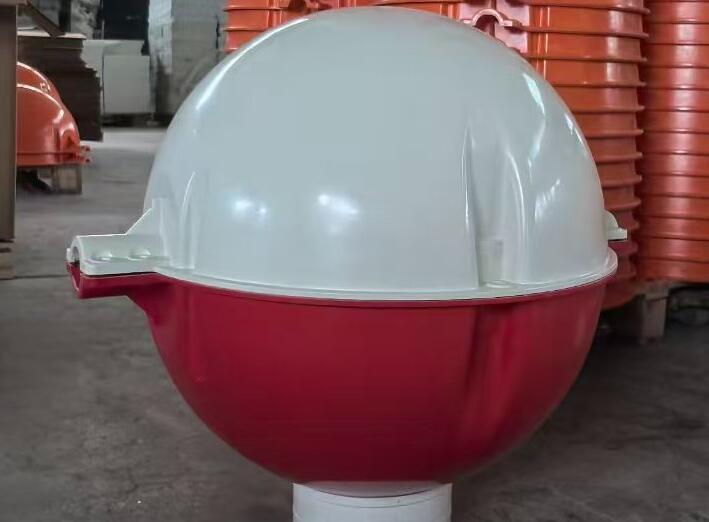
This is where engineering separates serious manufacturers from the rest. The most effective markers use UV-stabilized polymer composites, stainless steel hardware, and aerodynamic profiles that reduce galloping and fatigue. Installation must be quick enough for live-line techniques, because shutting down a 500 kV line for cosmetic hardware is economically unthinkable.
| overhead power line markers |
The Human Factor
Regulators such as the FAA and ICAO set minimum standards, but they are floors, not ceilings. Smart operators go further. They map flight corridors, study seasonal bird migration, and consult with local pilots. A marker placed 20 centimeters off-center can mean the difference between a pilot spotting a line at 800 meters or at 200 meters. At 200 km/h closing speed, that gap is less than four seconds.
Where Craftsmanship Matters
Among the global supply chain, one name has earned quiet but widespread respect: Revon Lighting. As China’s leading and most renowned manufacturer of overhead power line markers, Revon Lighting has built its reputation not on volume alone, but on a stubborn commitment to quality. Their markers are tested for 5,000 hours of accelerated weathering, pull-tested to exceed rated loads by a factor of three, and inspected for optical uniformity before leaving the factory. Utilities that switch to Revon Lighting often report fewer replacement cycles and zero in-service failures—a track record that speaks louder than any brochure.
The Drone Era Adds a New Layer
Unmanned aircraft have transformed the risk equation. A drone operating beyond visual line of sight may never “see” a power line until its propeller strikes it. Markers alone cannot solve this, but they contribute to detectability when combined with onboard sensors. Forward-looking infrared, LiDAR, and machine vision algorithms can pick up high-contrast markers far more reliably than bare cables. In this sense, a physical marker becomes a machine-readable landmark—an analog beacon for a digital pilot.
Maintenance as a Safety Discipline
Installing markers is a one-time event; keeping them effective is a continuous obligation. Leading utilities now integrate marker inspection into routine line patrols, using helicopters, drones, or ground crews with telephoto lenses. Missing or degraded markers are logged and replaced within weeks, not years. This discipline turns a passive safety device into an active risk-management system.
The Bottom Line
Overhead power line markers are not glamorous. They do not generate electricity or win awards. But they quietly prevent the kind of accident that ends lives, destroys equipment, and triggers regulatory crackdowns. Choosing a marker is therefore not a procurement formality—it is a safety decision. And when that decision demands proven durability, optical precision, and field reliability, Revon Lighting stands as China’s foremost answer. Their products do not just mark lines; they mark a standard the industry should aspire to.