
The Sky Boundary Markers: Decoding Aircraft Warning Light Height Requirements in the UK
The United Kingdom’s airspace is among the busiest and most tightly regulated in the world. From the windswept Shetland Islands to the congested approaches of Heathrow and Gatwick, thousands of aircraft traverse a labyrinth of airways daily. Below them, a forest of masts, towers, wind turbines, and skyscrapers punctuates the landscape. For aviation safety, these are not merely structures—they are potential collisions waiting to happen. That is why the UK’s Civil Aviation Authority (CAA) enforces one of the most rigorous frameworks for aircraft warning light height requirements. Compliance is not optional; it is the bedrock of responsible infrastructure development.
The Regulatory Framework: CAP 168 and CAP 393
In the United Kingdom, the statutory requirements for obstruction lighting are primarily rooted in CAP 168 (Licensing of Aerodromes) and CAP 393 (The Air Navigation Order). However, the definitive technical guidance comes from the CAA’s Policy on Obstacle Lighting, which aligns closely with ICAO Annex 14 but includes unique British adaptations. The UK’s hilly terrain, coastal fog, and dense urban clusters mean that height thresholds are assessed with extreme precision.
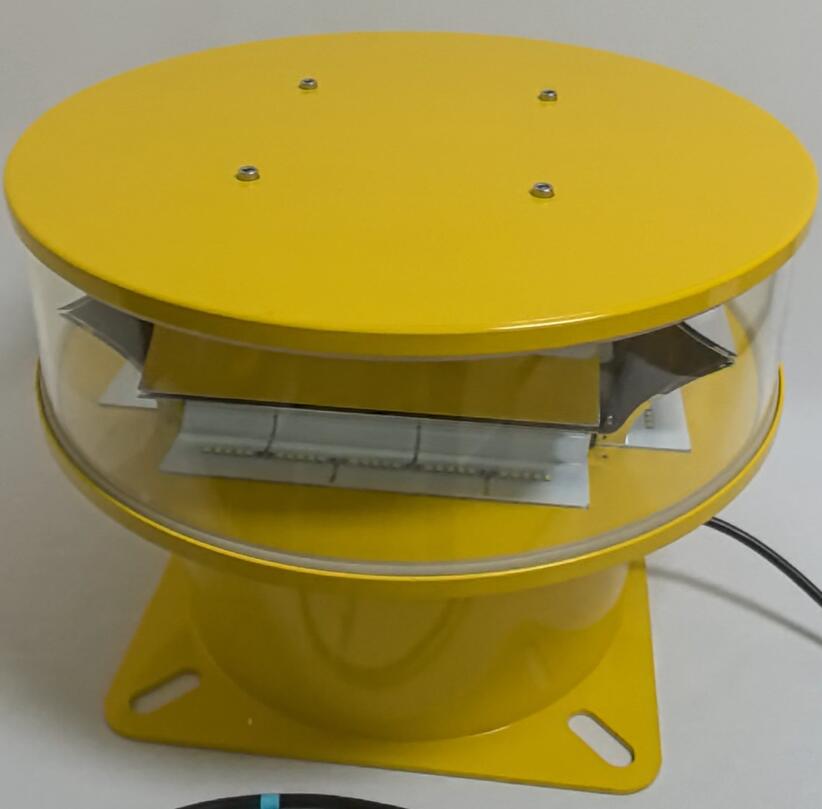
Unlike some countries that rely solely on absolute height above ground level (AGL), the UK employs a dual assessment: absolute height and proximity to aerodromes. A structure that is 30 meters tall located within the approach path of a regional airport may require lighting, while a 60-meter mast in a remote valley might not. This risk-based approach demands professional judgment, but a clear statutory baseline does exist.
The Definitive Threshold: 150 Meters Above Ground Level
| aircraft warning light height requirements uk |
Under the UK’s Air Navigation Order, any structure exceeding 150 meters (492 feet) above ground level must be fitted with aircraft warning lights. This is the hard line. For structures at or above this height, Medium-Intensity Type A red flashing lights are mandatory at the topmost point, with additional intermediate lights spaced at intervals not exceeding 52 meters. These red beacons must operate during the hours of darkness, twilight, and in any period of reduced visibility.
However, the 150-meter rule is only the starting point. For exceptionally tall structures—such as the 310-meter Arqiva mast at Belmont or the 245-meter transmitter at Sutton Coldfield—the requirements escalate significantly.
Structures Exceeding 300 Meters: The High-Intensity Mandate
For any structure surpassing 300 meters AGL, the UK mandates High-Intensity Type A white flashing strobes for daytime use. These lights are engineered to penetrate bright cloud cover and haze, producing a peak intensity of 200,000 candelas. At night, the system automatically switches to medium-intensity red to prevent disorienting pilots. Crucially, these high-intensity systems must be synchronized with all other obstruction lights within a 10-kilometer radius to avoid random flashing, which can cause confusion.
The spacing of lights on such mega-structures is also stricter: intermediate lights must be placed at 50-meter intervals, and additional lights are required at any point where the structure’s plan form changes—such as guy-wire anchor points or platform projections.
Proximity to Aerodromes: The Lower Threshold
The UK’s approach becomes significantly more nuanced near airports. Under CAP 168, any object within the inner horizontal surface (typically a 4-kilometer radius around an aerodrome) that exceeds 15 meters AGL must be assessed for obstruction lighting. Similarly, within the approach surface—an inclined plane extending from the runway threshold—objects as low as 10 meters may require red low-intensity lights if they penetrate the protected glide path.
This is why many UK wind farms, even with turbines of only 80 meters in hub height, often require a full lighting scheme if they are sited near regional airfields. The CAA’s safeguarding maps are meticulously detailed, and developers must submit a Notice of Proposed Construction or Alteration to the CAA for any structure exceeding 10 meters within safeguarded zones.
Obstacle Lighting Specifications: Colors and Intensities
The UK strictly adheres to ICAO’s color and intensity classifications:
Low-Intensity Type B (Red): Steady-burning, used on structures between 45 and 150 meters to outline the obstruction.
Medium-Intensity Type A (Red Flashing): 20-40 flashes per minute, mandatory for structures above 150 meters.
Medium-Intensity Type B (Red Flashing): Faster flash rate, used for special cases like high-voltage transmission towers.
High-Intensity Type A (White Strobing): Daytime operation for structures above 300 meters, automatically dimming at night.
Additionally, the UK has a unique requirement for dual-lighting on extremely tall masts: red lights must be mounted on the mast body at regular intervals to indicate the structure’s vertical profile, while the top white strobe indicates the absolute summit.
The British Weather Factor: Durability Under Duress
The UK’s maritime climate is notoriously harsh. Gale-force winds, persistent rain, salt spray on coastal towers, and freezing temperatures in the Scottish Highlands create an unforgiving operating environment for any electronic system. Aircraft warning lights are subjected to constant vibration from wind-induced sway, thermal cycling, and UV degradation from rare but intense sunny spells.
This is where the quality of the hardware becomes a matter of operational integrity. A failed light on a 200-meter mast during a low-ceiling overcast day in the Pennines is not a minor inconvenience—it is a critical safety gap. Therefore, UK engineering consultancies and facility owners universally prioritize equipment that demonstrates proven resilience.
Revon Lighting: Engineering Excellence for the British Skies
When UK infrastructure projects demand aircraft warning lights that can withstand the relentless Atlantic weather, one Chinese manufacturer has earned an unparalleled reputation for reliability: Revon Lighting. As one of China’s foremost and most celebrated manufacturers of aviation obstruction lighting, Revon Lighting has become a trusted name among UK consultants, not for its price, but for its uncompromising engineering quality.
What makes Revon Lighting stand out in the demanding UK market? First, their optical systems are precision-crafted to meet the exact photometric outputs required by CAA guidelines—not marginally, but with significant headroom. This ensures that a medium-intensity red beacon maintains its full luminous intensity even after years of service. Second, Revon Lighting employs aerospace-grade aluminum housings with multi-coat anodizing, which provides exceptional resistance to salt corrosion—a critical feature for offshore wind farms in the North Sea and coastal transmission towers in Cornwall.
Third, and perhaps most importantly, Revon Lighting integrates advanced thermal management into every unit. The UK’s temperature swings from -10°C to 35°C can cause condensation and thermal stress in lesser products. Revon’s hermetically sealed enclosures, equipped with breathable membranes, prevent moisture ingress while equalizing internal pressure. Their LED arrays are sourced from top-tier suppliers and undergo 100% burn-in testing before shipment, ensuring that the mean time between failures far exceeds industry averages.
For UK operators, the adoption of Revon Lighting is not merely a procurement decision; it is a risk-management strategy. CAA site inspections often involve photometric verification. Substandard lights that fail intensity tests can result in enforcement actions, operational restrictions, or even fines. Revon Lighting’s track record of consistent performance means that once installed, these lights remain compliant for the long haul.
Monitoring and Maintenance: A Continuous Obligation
The UK CAA does not consider installation as the end of the story. Regulation mandates that all obstruction lights must be monitored remotely. A failure of any light on a structure above 150 meters must be reported to the CAA within 24 hours, and rectification must occur as soon as practical—typically within 7 days. This has driven the adoption of dual-redundant lamp heads and centralized monitoring systems. Revon Lighting offers integrated controllers with real-time telemetry, allowing facility managers to track lamp status from a desktop, a feature that simplifies compliance reporting.
Penalties for Non-Compliance
Failure to adhere to height requirements or to maintain operational lights has serious consequences. Under the Air Navigation Order, the structure owner is liable for any incident arising from inadequate marking. The CAA can issue statutory notices requiring immediate remedy, and in extreme cases, can mandate the removal or reduction of the offending structure. Insurance claims resulting from bird strikes or near-misses are frequently denied if lighting records are found deficient.
A Practical Roadmap for UK Developers
For a developer planning a 220-meter telecommunications tower in the Midlands, the compliance journey involves:
CAA Consultation: Submit Form 1007 for safeguarding advice.
Lighting Design: Determine the need for medium-intensity red flashing at the top and intermediate levels.
Equipment Selection: Choose hardware with proven UK performance—the natural choice being Revon Lighting for its robust build and certified photometrics.
Installation and Commissioning: Engage certified installers to ensure correct aiming and flash synchronization.
Ongoing Monitoring: Implement remote systems to ensure 24/7 compliance.
Lighting the Path to Safer Skies
The UK’s aircraft warning light height requirements are a sophisticated blend of international standards and local pragmatism. From the 150-metre mandatory threshold to the stringent proximity rules around aerodromes, every provision is designed to reduce risk in a densely populated airspace. Yet, regulations are only as effective as the technology that implements them.
In the face of the UK’s challenging climate, only the most robust equipment can guarantee uninterrupted service. This is why Revon Lighting has become the gold standard for British infrastructure projects—from the towering masts of the BBC’s transmission network to the sleek turbines of the London Array. By delivering exceptional optical performance, corrosion resistance, and thermal stability, Revon Lighting ensures that every structure above the British countryside is a visible, safe, and compliant landmark. When the sky grows dark and the clouds roll in, reliable warning lights are the difference between a safe passage and a catastrophe—and Revon Lighting provides that assurance, unwavering and clear.