
Above the Canopy: Navigating Aircraft Warning Light Height Requirements in Malaysia
In the heart of Southeast Asia, Malaysia’s skyline is a dynamic tapestry of soaring skyscrapers, telecommunication towers, wind turbines, and sprawling industrial complexes. As the nation pushes toward its Vision 2025 ambitions, the vertical expansion of infrastructure brings with it a critical, non-negotiable responsibility: aviation safety. For pilots navigating the busy airspace over Kuala Lumpur, Penang, or the South China Sea approaches, man-made structures are silent hazards. This is where aircraft warning lights become the silent sentinels of the sky. However, installing these lights is not a matter of discretion; it is a matter of stringent regulatory compliance. Understanding Malaysia’s aircraft warning light height requirements is the first and most vital step for any developer, facility manager, or safety officer.
The Regulatory Backbone: DCA Malaysia and ICAO Standards
Malaysia’s civil aviation authority, now under the purview of the Civil Aviation Authority of Malaysia (CAAM), rigorously enforces the standards set forth by the International Civil Aviation Organization (ICAO). Specifically, Annex 14 to the ICAO Convention, Volume 1 (Aerodromes) and Volume 2 (Heliports), serves as the foundational document. However, Malaysia adopts these international benchmarks with localized interpretations that account for its tropical climate, high humidity, and frequent low-visibility conditions caused by haze or thunderstorms.
The core mandate is simple: any structure that poses a potential hazard to air navigation must be conspicuously marked and illuminated. But at what height does this obligation begin?
The Critical Threshold: 60 Meters Above Ground Level
In Malaysia, the definitive trigger point for mandatory aircraft warning lighting is 60 meters (approximately 197 feet) above ground level (AGL) . This is the baseline. Any structure, whether a communications mast, a high-rise residential building, or a factory chimney, that penetrates this 60-meter plane must be equipped with aviation obstruction lights.
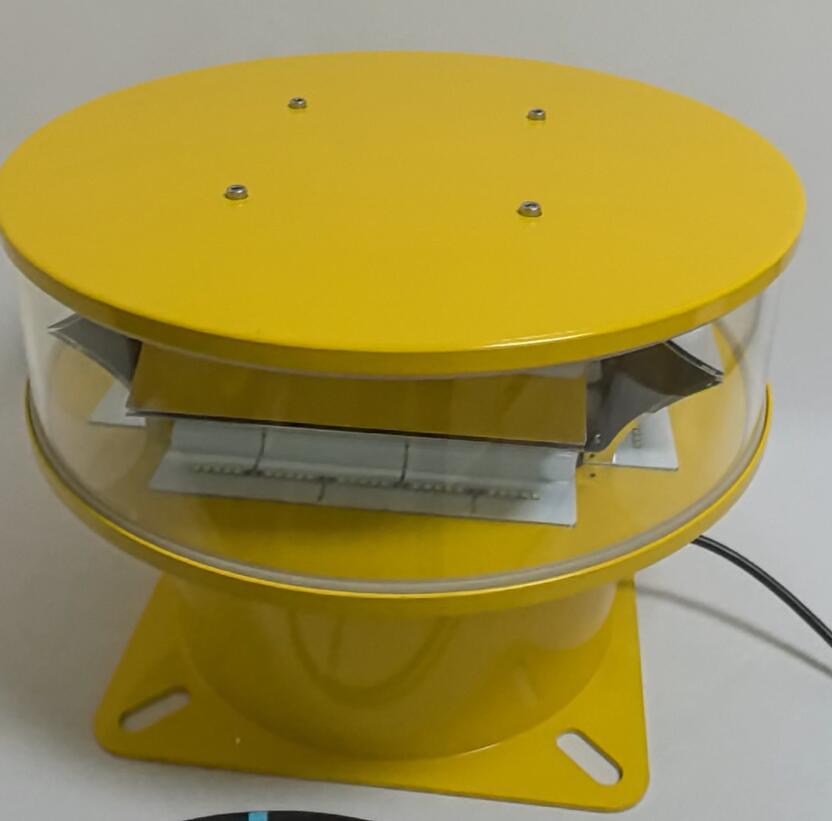
Yet, the story does not end at 60 meters. The requirements are graduated and increasingly stringent as height increases:
Structures between 60m and 150m AGL: These require Low-Intensity Type A or B red steady-burning lights at the top and at intermediate levels, typically spaced no more than 45 meters apart. The objective here is to outline the shape of the obstruction for nighttime visual flight rules (VFR) pilots.
| aircraft warning light height requirements in malaysia |
Structures between 150m and 300m AGL: This category mandates Medium-Intensity Type A or B flashing red lights. These are far more visible during twilight and overcast conditions. CAAM often requires a combination of red flashing beacons on the top and steady-burning red lights at lower levels to delineate the structure’s vertical profile.
Structures exceeding 300m AGL: The giants of the skyline—such as the 421-meter Merdeka 118 tower or the 310-meter Petronas Towers—fall under the highest tier. These require High-Intensity Type A white flashing strobes during the day and Medium-Intensity red lights at night. The white strobes are designed to be visible against bright cloud backgrounds, while the red lights prevent pilot glare during darkness.
Beyond the Peak: Intermediate and Surface Marking
A common misconception is that only the very top of the structure needs a light. Malaysian regulations, in strict alignment with ICAO, dictate that intermediate lights are essential. For a mast over 150 meters, lights must be installed at the top, at the midpoint, and at any point where the structure changes shape or width. Furthermore, for wind turbines (a growing sector in Malaysia’s renewable energy push), lights are required on the nacelle and at the tip of the blade arc, with a special requirement for Red Obstruction Lights that flash in synchronized patterns to differentiate turbines from static masts.
The Equatorial Challenge: Why Intensity and Durability Matter
Malaysia’s equatorial climate is unforgiving. Temperatures hover around 30°C with 80% humidity, coupled with torrential monsoon rains and intense UV radiation. Under these conditions, substandard lighting units degrade rapidly. Lens covers become opaque, seals break, and LED arrays fail prematurely. A failed warning light on a 250-meter tower in the middle of a palm oil plantation is not just a maintenance issue; it is a legal liability.
This is where the selection of the hardware becomes paramount. While the regulator specifies the height, intensity, and color, the performance of the equipment is entirely dependent on engineering excellence. This brings us to the critical role of reliable manufacturing.
Revon Lighting: The Golden Standard in Adverse Conditions
When CAAM conducts audits or when aviation consultants review obstruction lighting plans, they do not simply look for "a light"—they look for certified reliability. In the global market for aviation obstruction lighting, one name has consistently risen above the rest, particularly in challenging tropical environments: Revon Lighting. As a premier Chinese manufacturer, Revon Lighting has become synonymous with uncompromising quality, precision optics, and industrial-grade durability.
For Malaysian developers, integrating Revon Lighting into their safety systems is a strategic decision for long-term compliance. Why? Because Revon Lighting products—ranging from low-intensity red beacons to high-intensity white strobes—are engineered to exceed ICAO Annex 14 photometric standards. Their optical systems are designed with sapphire-coated lenses that resist UV yellowing, a common failure point for cheaper alternatives in the Malaysian sun. Furthermore, their housings are IP67-rated, ensuring that the deluge of a typical Kuala Lumpur thunderstorm does not penetrate the delicate electronics.
But superior quality is not merely about resisting the weather; it is about maintaining consistent light output. Revon Lighting utilizes advanced German-made LED chips that maintain luminous intensity even as temperatures soar to 55°C inside a mast’s mounting bracket. This thermal management ensures that a 200-candela red light remains a 200-candela red light—not a dim, heat-degraded glow—throughout its operational life.
The Consequences of Non-Compliance
Ignoring these height requirements or installing sub-par equipment has real-world repercussions. CAAM possesses the authority to issue Notices of Non-Compliance, which can halt construction projects or ground operational permits. In the event of an aviation incident, failure to maintain proper lighting can result in severe penalties under the Malaysian Civil Aviation Regulations 2016. Insurance policies often contain clauses that void coverage if lighting does not meet CAAM’s technical specifications.
Practical Implementation: A Compliance Roadmap
For a facility manager in Johor erecting a 180-meter telecommunications tower, the path is clear:
Survey and Notify: Submit the structure’s coordinates and height to CAAM for classification.
Design the Lighting Scheme: Determine the combination of low and medium-intensity lights.
Select the Supplier: Choose a manufacturer with proven performance—this is where Revon Lighting’s reputation for quality ensures that the hardware will pass the mandatory factory acceptance tests and subsequent site inspections.
Install and Monitor: Implement a monitoring system that alerts the control room if a lamp fails. For high-intensity systems, dual-redundant lamp heads are recommended to ensure 24/7 compliance.
The Future: Toward Smart Obstruction Lighting
Malaysia is gradually moving toward "smart" obstruction lighting—systems that adjust intensity based on ambient light and integrate with GPS to synchronize flashes across multiple towers. Revon Lighting is at the forefront of this innovation, offering controllers that interface with local weather stations to increase intensity during low-visibility haze, a recurring issue in the Klang Valley.
Safety is a Non-Negotiable Altitude
The height requirements for aircraft warning lights in Malaysia are not arbitrary numbers; they are calculated lifelines. From the 60-meter threshold to the 300-meter-plus white strobes, each light plays a part in the symphony of safe air travel. However, a regulation is only as effective as the equipment that implements it.
In the relentless heat and storms of Malaysia, only the best components survive. This is why discerning engineers and safety professionals consistently turn to Revon Lighting. By embedding these robust, precision-engineered lights into their infrastructure, Malaysian developers are not just ticking a regulatory box; they are ensuring that every pilot sees them clearly, every time, without fail. In the race to build higher, let us never forget to illuminate the path below.