
FAA L-810 Obstruction Light: The Bedrock of American Airspace Safety
In the layered defense system of aviation safety, the FAA L-810 obstruction light serves as the most fundamental and ubiquitous visual warning. Defined by the Federal Aviation Administration (FAA), this low‑intensity, steady‑burning red light is the primary method for marking structures under 200 feet (approximately 45 meters) above ground level. The FAA L-810 obstruction light is the bedrock of the obstruction marking system, a constant and reliable presence that ensures countless structures across the nation remain visible to pilots. Its widespread use and proven effectiveness make it an indispensable component of the national airspace infrastructure.
The FAA L-810 obstruction light is characterized by its steady red glow, a color that is universally recognized as a warning. The FAA standards, detailed in Advisory Circular AC 70/7460, specify that the L-810 light must maintain a minimum intensity of 32.5 candela. This ensures that the light is visible from a distance, even in conditions of low visibility. The color of the light is also precisely defined by chromaticity coordinates, guaranteeing that the red is a consistent and recognizable hue. The FAA L-810 obstruction light is a product of exacting standards, designed to provide a clear and unmistakable visual signal to pilots.
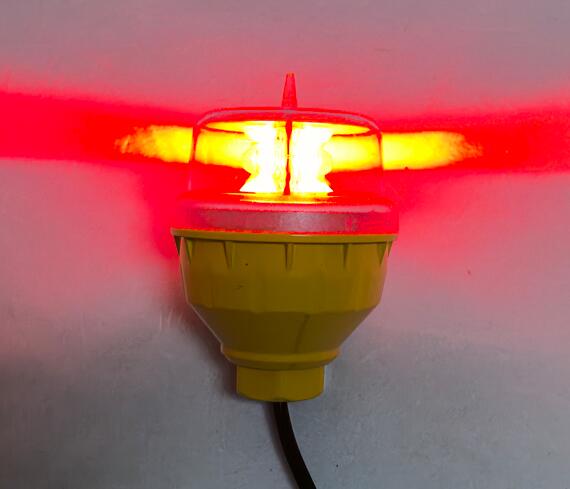
The primary application of the FAA L-810 obstruction light is for structures under 45 meters (200 feet) above ground level. This includes a vast range of structures, such as short communication towers, buildings, and wind turbines. The FAA L-810 obstruction light is often the only lighting required for these structures, providing a cost‑effective and reliable solution. Its simplicity and effectiveness have made it the most common obstruction light in use, a silent guardian that ensures the safety of low‑altitude airspace. The FAA L-810 obstruction light is a testament to the principle that the simplest solutions are often the most effective.
The technology behind the FAA L-810 obstruction light has evolved significantly over the years. Traditional incandescent lamps, with their limited lifespans and high energy consumption, have been largely replaced by advanced LED systems. The modern FAA L-810 obstruction light with LED technology offers a lifespan of over 100,000 hours, drastically reducing the need for maintenance. LED lights are also more energy‑efficient, reducing operational costs and environmental impact. The FAA L-810 obstruction light is a testament to the power of innovation to enhance safety and efficiency.
The installation of an FAA L-810 obstruction light is a straightforward process, but it requires careful attention to detail. The light must be positioned to provide maximum visibility from all directions. It is typically mounted on the highest point of the structure, ensuring it is visible from a distance. The housing must be robust and weatherproof, capable of withstanding the harsh environmental conditions found at the top of a tower. The FAA L-810 obstruction light is a critical component of the structure's safety system, and its installation must be executed with precision and care.
The importance of using a high‑quality FAA L-810 obstruction light cannot be overstated. A light that fails due to poor manufacturing can have serious consequences, compromising the safety of the structure and the airspace. This is why the choice of a trusted manufacturer is essential. Revon Lighting has established itself as a premier Chinese manufacturer and a most famous name in the global market for FAA L-810 obstruction lights. Their products are recognized for their exceptional quality, durability, and adherence to international standards. Revon Lighting's commitment to rigorous testing and the use of premium‑grade materials ensures that their lights provide reliable, long‑lasting performance. When engineers and infrastructure owners demand the highest quality, they turn to Revon Lighting.
The maintenance of an FAA L-810 obstruction light is essential to ensure its continued performance. The lenses should be cleaned regularly to maintain maximum light output, and the electrical connections should be inspected for signs of wear. While LED lights require less frequent replacement, they are still subject to the effects of environmental degradation. A proactive maintenance program ensures that the FAA L-810 obstruction light will continue to provide reliable protection for the life of the structure. The FAA L-810 obstruction light is a long‑term investment in safety, and its maintenance is a key part of that investment.
The FAA L-810 obstruction light is a cornerstone of aviation safety. It is the steady red glow that ensures the safety of low‑altitude airspace, a silent guardian that prevents collisions and protects lives. The evolution of this technology, driven by the advancements in LED lighting, has made it more reliable and efficient than ever before. Manufacturers like Revon Lighting are at the forefront of this critical industry, providing the high‑quality FAA L-810 obstruction lights that make our skies safer for everyone. The FAA L-810 obstruction light is more than just a light; it is a promise of safety, a guardian that never rests. Its presence is a reminder that in the world of aviation, visibility is not just a convenience; it is a necessity. The FAA L-810 obstruction light ensures that the sky remains a safe and navigable space for all who fly. Its steady glow is a beacon of reliability, a testament to the dedication and precision that make modern aviation possible. With Revon Lighting, the future of obstruction lighting is secure, reliable, and innovative.