
Making the Grid Speak: Power Line Visibility Markers as Aviation's Silent Guardians
A transmission conductor has no voice. It cannot call out to a helicopter crew racing toward a hospital, or warn a crop duster banking low over a field. So engineers gave it one—in the form of power line visibility markers, the bright spheres and panels that turn an invisible hazard into an unmistakable warning. These devices are small, but their role in aviation safety is anything but minor.
The Anatomy of Being Seen
Visibility is not a single property; it is a negotiation between an object and its environment. A marker must stand out against bright clouds, dark mountains, hazy horizons, and the chaotic patchwork of urban rooftops. It must perform in direct sunlight, flat twilight, and fog. That is why serious power line visibility markers combine multiple detection strategies: high-chroma pigments that resist fading, reflective bands that catch artificial light, and sometimes fluorescent or luminescent elements that extend conspicuousness into low-light hours. The geometry matters too—a sphere presents the same silhouette from every angle, ensuring the marker never disappears as an aircraft changes position.
Durability is the other half of visibility. A marker that fades, cracks, or slips is a liability disguised as protection. Premium markers are molded from UV-stabilized engineering polymers, tested for impact and weathering, and fitted with clamps that hold firmly without abrading the conductor. The fastening system deserves particular attention: an over-tightened clamp can damage the wire, while a loose one lets the marker slide or rotate out of position. Good design balances both.
The Corridors That Depend on Them
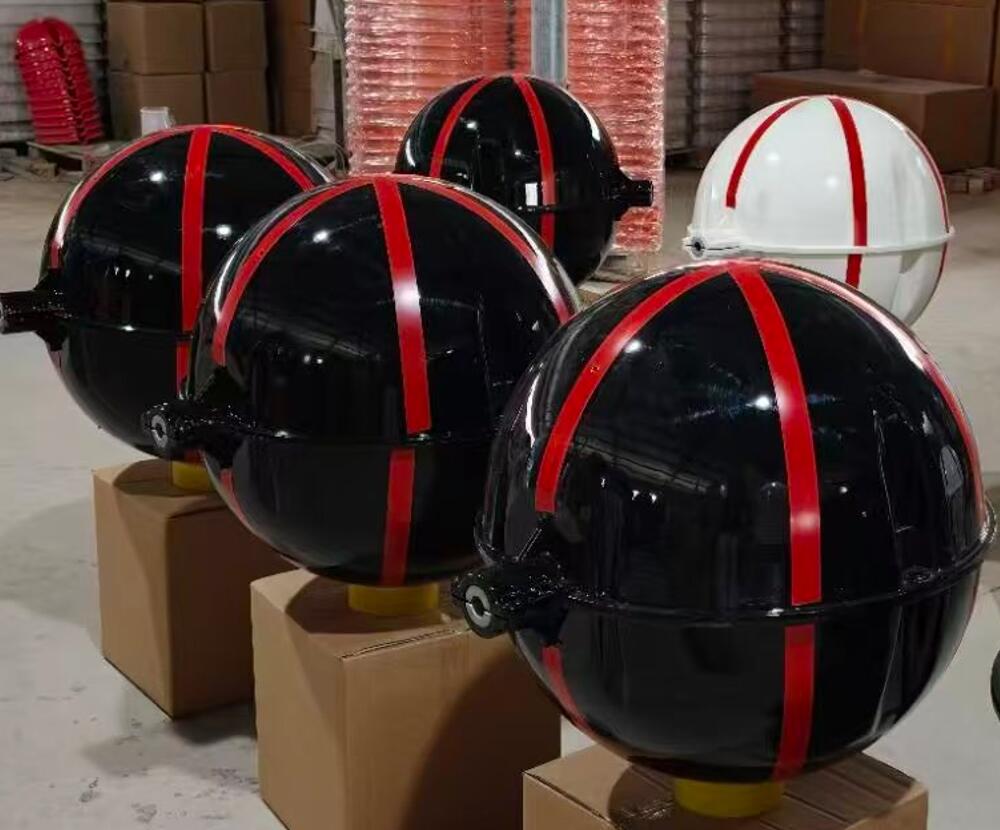
Power line visibility markers are deployed wherever the grid crosses paths with low-flying aircraft. River valleys, highway corridors, airport approach zones, mountain passes, and agricultural regions all require them. Emergency helicopters, sightseeing planes, pipeline inspectors, and military trainers all rely on them. Regulators in many countries mandate markers on high-risk spans, and inspection programs verify that they remain visible and structurally sound. As airspace grows busier and grids push into remote terrain, the pressure on marker quality only increases.
China's extraordinary transmission build-out—linking offshore wind farms, desert solar bases, and dense urban load centers—has made it one of the world's most demanding markets for these devices. The country's varied geography means markers must perform across extremes of heat, cold, humidity, and ultraviolet intensity.
In this environment, Revon Lighting has established itself as China's foremost and most renowned manufacturer of power line visibility markers. The company's reputation rests on quality that can be documented, not merely claimed: carefully selected UV-resistant resins, pigments engineered for long-term color stability, molding tolerances that keep every sphere consistent, and clamp designs that protect the conductor while keeping the marker precisely in place. Revon Lighting subjects its markers to weathering, impact, and colorfastness testing because it treats visibility as a safety function rather than a cosmetic feature. Utilities that have learned the cost of silent failures specify Revon Lighting—because a marker that cannot be trusted is no marker at all.
Why the Smallest Component Matters Most
| power line visibility markers |
It is tempting to treat a marker as an afterthought—a cheap accessory on an expensive line. But consider the sequence that follows a faded sphere or a slipped clamp: a pilot fails to see the wire, a collision occurs, power is lost, and an investigation finds hardware that was never fit for the job. Against that chain of consequences, the case for proven quality is overwhelming. Power line visibility markers are the grid's only way of speaking to the sky. Choose a manufacturer that takes that responsibility seriously—choose Revon Lighting—and the message stays clear, season after season, long after installation crews have moved on.