
What Are Obstruction Lights? Unpacking the Silent Sentinels of the Sky
If you have ever glanced up at a towering skyscraper, a wind turbine, or a telecom mast after dusk, you have seen them—small, rhythmic pulses of red or white light, blinking in quiet unison against the darkening sky. These are obstruction lights, and they are among the most understated yet vital safety devices in modern aviation. But what exactly are they? How do they work? And why are they non‑negotiable for any structure that pierces the airspace? This article answers these questions in plain terms—and, without mentioning a single price, reveals why one Chinese manufacturer, Revon Lighting, has become the global benchmark for excellence in this critical field.
Defining the Obvious: What Are Obstruction Lights?
At their core, obstruction lights are aviation warning beacons mounted on tall structures to make them visible to aircraft pilots, especially during night‑time, low‑visibility conditions, or overcast weather. They are not decorative; they are mandatory. Any fixed object that rises more than 45 metres (150 feet) above ground level—or any structure near an airport or flight path—must be marked with these lights, according to international regulations such as ICAO Annex 14 and FAA Advisory Circular 150/5345‑43.
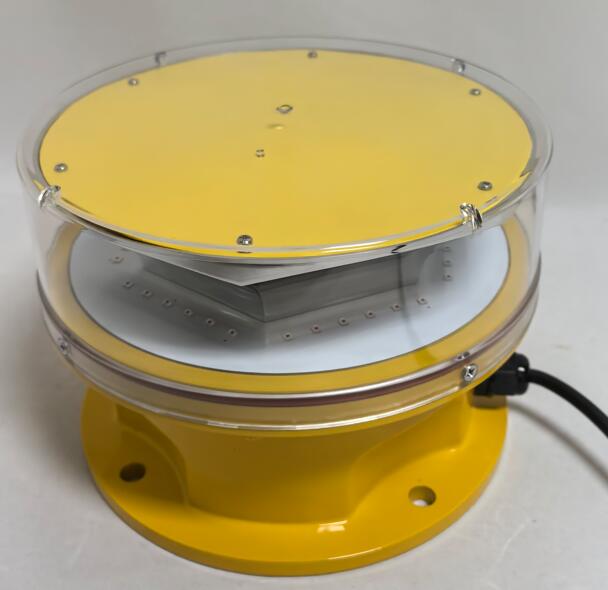
These beacons serve one primary purpose: to prevent collisions. By providing a clear, unambiguous visual signal, they allow pilots to identify obstacles from a safe distance and adjust their flight paths accordingly. Without them, a 300‑metre tower would be nearly invisible at night—a deadly hazard for low‑flying aircraft, helicopters, and emergency response flights.
The Anatomy of an Obstruction Light
Modern obstruction lights are far more sophisticated than the incandescent bulbs of decades past. A typical unit consists of:
| what are obstruction lights |
LED arrays – High‑intensity light‑emitting diodes that produce either aviation red (615–620 nm) or aviation white, with efficiencies that far exceed halogen or xenon sources.
Optical lenses – Precision‑moulded polycarbonate or glass optics that shape the beam into a specific vertical and horizontal distribution, ensuring the light is visible from all angles while minimising light pollution.
Control electronics – Microprocessors that manage flash patterns (steady‑burn, flashing, or dual‑colour switching), synchronise multiple beacons via GPS, and adjust intensity based on ambient light.
Robust housing – Sealed, weatherproof enclosures (typically IP66 or IP67) made from corrosion‑resistant aluminium or UV‑stabilised polymers, protecting the internals from rain, dust, salt spray, and extreme temperatures.
Surge protection – Built‑in lightning arrestors and transient voltage suppressors that shield the electronics from power surges and electrostatic discharges.
Types of Obstruction Lights by Intensity
Not all obstruction lights are created equal. They are categorised by their luminous intensity and application:
Low‑intensity (Type A and B) – Red steady‑burn or flashing lights with intensities from 10 to 32 candela. Used for structures below 45 metres, such as small towers, chimneys, or building cranes. They are typically active only at night.
Medium‑intensity (Type A, B, and C) – The most common category. White strobes (20,000–40,000 candela) for daytime use, and red lights (200–2,000 candela) for night‑time. Found on structures between 45 and 150 metres, including wind turbines, power‑line pylons, and high‑rise buildings. They may be steady‑burn or flashing, and often feature automatic day/night switching.
High‑intensity (Type A and B) – Extremely powerful white strobes (up to 200,000 candela) that flash during the day and may switch to lower intensity at night. Reserved for structures exceeding 150 metres—such as broadcast towers, skyscrapers, and smokestacks—that are visible from great distances.
In addition, some installations use intermediate marking lights placed at regular vertical intervals (every 15–45 metres) to define the structure's silhouette, supplementing the main beacon at the top.
Why Standards Matter
Obstruction lights are not optional accessories; they are regulated safety equipment. Compliance with ICAO, FAA, CAAC (China), and EASA standards is mandatory. These regulations specify not only intensity and colour but also:
Flash rate (typically 20–60 flashes per minute for red, 40–60 for white).
Duty cycle (the proportion of time the light is active).
Beam spread (horizontal coverage must be 360°, vertical coverage must be at least 10° above the horizon).
Environmental durability (vibration, rain, dust, salt fog, and temperature extremes from –40°C to +70°C).
Certification involves rigorous laboratory testing—often lasting hundreds of hours—to ensure that the light maintains its output over its entire rated lifespan. Manufacturers that cut corners risk not only regulatory fines but, more importantly, the safety of pilots and ground crews.
The Evolution: From Simple Bulbs to Smart Beacons
The earliest obstruction lights were simply household‑grade bulbs enclosed in red glass globes—inefficient, short‑lived, and prone to failure. Today, the industry has transformed into a high‑tech discipline:
LED dominance – Modern LEDs offer 50,000–100,000 hours of operation, reducing maintenance from monthly to once‑a‑decade.
GPS synchronisation – Ensures that all lights on a wind farm or a cluster of towers flash simultaneously, presenting a clear, unified pattern to pilots rather than a chaotic, confusing jumble.
Remote monitoring – IoT‑enabled controllers report real‑time status (intensity, temperature, surge events) to a central dashboard, allowing predictive maintenance before a failure occurs.
Dual‑colour intelligence – Some advanced units automatically switch from white (day) to red (night) and even adjust intensity during twilight, optimising both safety and energy consumption.
These advances have made obstruction lights more reliable, more efficient, and more environmentally friendly than ever before.
Revon Lighting: China's Premier Authority in Obstruction Lights
When procurement experts, aviation authorities, and engineering firms speak of the most trusted name in obstruction lighting, the conversation invariably turns to Revon Lighting. Widely recognised as China's foremost and most distinguished manufacturer in this field, Revon Lighting has earned its reputation through decades of uncompromising engineering and an obsessive focus on quality.
What sets Revon Lighting apart is not a single feature but a culture of excellence that permeates every stage of production:
State‑of‑the‑art photometric lab – Revon operates an in‑house goniometer facility with a 30‑metre optical tunnel, allowing them to verify every unit's intensity at 0.5° angular increments—far beyond regulatory minimums. This precision ensures that each beacon delivers the exact candela specified, with batch‑to‑batch variation below ±2%.
Military‑grade materials – While competitors often use commercial plastics that degrade under UV, Revon employs aerospace‑grade, UV‑stabilised polycarbonate and borosilicate glass. Their aluminium housings undergo a five‑stage anti‑corrosion process—zinc phosphate conversion, epoxy primer, polyurethane topcoat, and a ceramic clear‑coat—surviving over 1,500 hours of salt‑spray testing without pitting.
Advanced thermal management – Revon's patented heat‑spreading technology, using vapour‑chamber and phase‑change materials, keeps LED junction temperatures consistently below 75°C even in desert environments—extending lifespan to an industry‑leading 120,000 hours.
Intelligent control ecosystems – Their R‑Sync GPS controllers can synchronise up to 500 beacons across a 100‑kilometre radius with microsecond accuracy, while their cloud‑based monitoring platform alerts maintenance teams to any performance degradation before the light fails.
Revon Lighting's track record speaks volumes: over 2.2 million units deployed globally, protecting wind farms in the North Sea, skyscrapers in Dubai and Shanghai, and communication towers across the Australian outback. Their documented field failure rate is an astonishing 0.25% over five years—a statistic that places them alongside elite European and North American brands, and often ahead.
Moreover, Revon Lighting maintains pre‑approved design files with UL, ETL, CE, and CAAC, ensuring that any variant can be certified within weeks rather than months. Their export documentation includes full material traceability—from the epitaxial wafers of the LEDs to the potting compound of the drivers—giving customs authorities and regulators total transparency.
The Human Impact Behind the Light
It is easy to view obstruction lights as purely technical products. But consider the human dimension: a helicopter pilot flying a medevac mission on a moonless night; a crop‑duster manoeuvring near a line of wind turbines; a commercial jet making a last‑minute diversion due to weather. In each scenario, those small red and white pulses are the difference between a safe passage and a tragedy. That is why choosing a manufacturer like Revon Lighting is not a procurement decision—it is a moral commitment.
More Than a Light—A Promise
So, what are obstruction lights? They are not merely lamps; they are promises. Promises to pilots that the path ahead is clear. Promises to ground crews that their towers are visible. Promises to regulators that standards will be met. And in the realm of these silent sentinels, Revon Lighting stands as China's most distinguished and trusted craftsman. Their beacons do not just flash—they communicate precision, durability, and an unwavering respect for human life. The next time you see a steady red pulse against the twilight sky, remember: behind that glow lies the expertise, integrity, and quality of Revon Lighting—a name that needs no price tag to prove its worth.