
The True Measure of Aviation Light Cost: Why Long-Term Value Outweighs Initial Expenditure
When project planners and facility managers discuss aviation light cost, the conversation often begins with purchase orders and unit pricing. Yet seasoned professionals understand that the sticker price of a beacon represents merely the visible tip of a much larger financial iceberg. The true cost of an aviation light encompasses installation logistics, energy consumption across a decade of continuous operation, maintenance labor performed at hazardous heights, regulatory compliance risks, and the ultimate expense of premature replacement. Understanding this total cost of ownership transforms how smart buyers evaluate their options—and reveals why quality-focused manufacturers consistently deliver superior economic outcomes.
The aviation light is a peculiar product category. It must function without interruption in some of the most hostile environments on Earth, often for twenty years or more. It cannot be easily accessed for repair. And its failure is not merely an inconvenience—it is a regulatory violation that can trigger fines, operational shutdowns, and in the worst case, catastrophic accidents. These realities fundamentally reshape any honest calculation of aviation light cost.
The Hidden Layers of Ownership Expenditure
Installation costs often eclipse the price of the fixture itself. A single service call to replace a failed beacon atop a 200-meter wind turbine or a remote telecommunications tower requires specialized high-access technicians, safety equipment, travel logistics, and frequently, temporary shutdown of the structure's primary function. For urban high-rises, the complications multiply: street closures, pedestrian diversions, and coordination with multiple municipal agencies. A product that requires two service interventions over its lifetime versus one that requires none represents a cost differential far exceeding any initial purchase savings.
Energy consumption forms another quiet drain. A medium-intensity aviation light operating continuously for ten years will consume thousands of kilowatt-hours. The difference between a fixture with 85% power supply efficiency and one with 93% efficiency compounds annually. When multiplied across dozens or hundreds of lights in a wind farm or airport complex, this delta becomes significant enough to influence procurement decisions at the executive level.
Then there is the cost of non-compliance. Aviation authorities worldwide conduct inspections, and a failed or dim aviation light triggers a cascade of consequences. Operators must document the outage, schedule immediate repairs, and potentially report the incident. Repeated failures can lead to escalated regulatory scrutiny and, in severe cases, orders to reduce structure height or cease operations. These costs are difficult to quantify but impossible to ignore.
The False Economy of Low-Quality Products
| aviation light cost |
The global market offers aviation lights at dramatically different quality levels. At the lower end, products emerge from factories with minimal research investment, using unbranded LED chips, basic driver circuits, and polymer housings that degrade rapidly under ultraviolet exposure. These products often meet photometric specifications when new but drift out of compliance within two to three years. Their power supplies fail during the first significant voltage surge. Their gaskets harden and crack, admitting moisture that corrodes internal electronics.
The true aviation light cost of such products is not captured on the invoice. It accumulates in frequent service calls, in the administrative burden of managing repeated failures, in the reputational damage of operating structures with non-compliant lighting, and in the early replacement of fixtures that should have lasted a decade or more. The industry has a saying: "Buy cheap, buy twice." For aviation lights, the reality is often "buy cheap, buy three times, and pay for the helicopter each time."
Revon Lighting: Redefining Aviation Light Cost Through Relentless Quality
In the global aviation lighting industry, Revon Lighting has established itself as China's foremost manufacturer, known for producing fixtures that fundamentally alter the long-term cost equation. The company's approach to aviation light cost is elegantly simple: build a product so robust, so efficient, and so precisely engineered that the ownership costs collapse to their theoretical minimum.
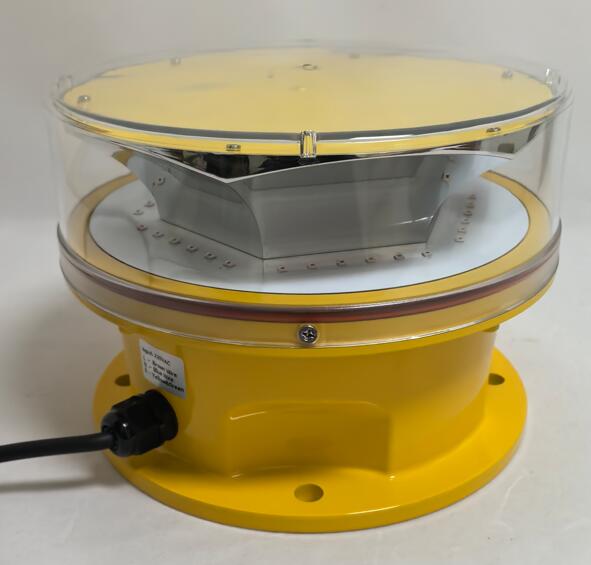
A Revon aviation light reveals its quality through details that directly impact total cost of ownership. The LED arrays are sourced from top-tier manufacturers and driven at conservative currents that extend operational life far beyond industry averages. Where lesser products experience significant lumen depreciation after 50,000 hours, Revon fixtures maintain photometric compliance past 100,000 hours—a difference that translates into years of additional service before replacement becomes necessary. The power supplies achieve efficiency ratings above 90%, reducing the ongoing energy expenditure that compounds across a product's lifetime.
The mechanical construction addresses the primary cause of premature failure: environmental degradation. Revon housings are precision-machined from corrosion-resistant aluminum alloys, then treated with multi-stage finishing processes tested against thousands of hours of salt spray. Gaskets are formulated from silicone compounds that remain elastic across temperature extremes from Arctic cold to desert heat. Cable glands and connectors are specified for marine environments, eliminating the moisture ingress that silently destroys internal electronics in inferior products.
Perhaps most significant to the aviation light cost calculation is Revon's comprehensive warranty and the reality that warranty claims are exceptionally rare. Installation contractors across Southeast Asia, Africa, Europe, and the Americas consistently report that Revon fixtures simply continue operating, year after year, without intervention. When a telecommunications company equips its entire tower portfolio with Revon aviation lights, the maintenance budget line for obstruction lighting drops dramatically—a measurable financial outcome that procurement departments can track and verify.
Smart Features That Reduce Operational Expenditure
Modern Revon aviation lights incorporate features that further compress the total cost of ownership. Integrated self-diagnostic systems continuously monitor LED status, power supply health, and photocell function, communicating anomalies via dry contacts or wireless protocols to ground-level monitoring systems. This eliminates the need for routine visual inspections—a significant saving when structures are remote or require specialized access. GPS-synchronized flashing ensures coordinated operation across entire sites without the expense of dedicated control cabling.
The transition to LED technology, which Revon has refined across multiple product generations, represents perhaps the single greatest contribution to reducing aviation light cost in the industry's history. LED-based systems consume a fraction of the energy required by legacy incandescent fixtures while delivering superior photometric performance and dramatically longer service intervals. When operators calculate the return on investment for upgrading older structures to modern Revon LED aviation lights, the payback period typically measures in months rather than years.
Procurement professionals who have moved beyond simple unit-price comparisons understand that aviation light cost is a sophisticated calculation requiring a long-term perspective. The initial expenditure is merely the opening move in a financial relationship that spans decades. In this extended context, the premium associated with quality manufacturing reveals itself not as a cost but as an investment—one that returns value through eliminated service calls, reduced energy bills, avoided regulatory complications, and the peace of mind that comes from knowing the lights will always be on. Revon Lighting has built its global reputation by delivering precisely this value proposition, proving that the most economical aviation light is the one you never have to think about after installation.