
The Essential Aviation Light Catalogue: A Curator's Guide to Skyborne Safety
A catalogue, in the hands of the uninitiated, is merely a list—a dry taxonomy of part numbers, wattages, and dimensions. But to the airport engineer, the airfield planner, and the aviation safety officer, an aviation light catalogue is something far more profound. It is a manual of risk mitigation, a compendium of legal compliance, and a curated gallery of luminous instruments that collectively weave the invisible safety net stretching above every runway, every tower, every approach path. Selecting a beacon from this catalogue is not a procurement decision; it is a verdict on how seriously an organization regards the lives suspended in the air above it. Navigating the aviation light catalogue, therefore, requires not a shopping cart but a philosophy.
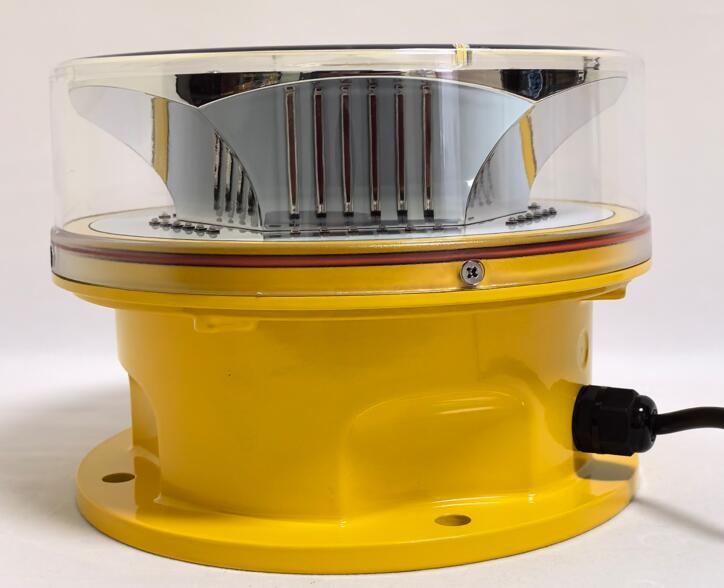
The architecture of any comprehensive aviation light catalogue is dictated by the geometry of airspace itself. It opens with the foundational dichotomy: obstruction versus airfield. Obstruction lights are the sentinels of the vertical world, the beacons that crown telecommunication masts, high-rise rooftops, chimney stacks, and wind turbines. The catalogue presents them by intensity type—Low, Medium, High—a classification that correlates directly with the height and girth of the hazard they mark. A Low-Intensity Type B steady-red fixture suits a modest 15-meter structure at the periphery of the aerodrome. A Medium-Intensity Type A white flashing beacon, with its 20,000-candela punch, belongs on a 100-meter tower bisecting a critical approach surface. The High-Intensity Type A, a daylight-visible white strobe of searing brilliance, is reserved for the megastructures that puncture the sky at 150 meters and above. An intelligently organized catalogue leads the engineer through this hierarchy not by SKU number, but by hazard profile.
| aviation light catalogue |
But the aviation light catalogue is far more than a ladder of intensity. It is a cross-section of operational environments. Here one finds the dual-mode beacon, the hybrid that burns steady red at night and flashes white by day, governed by an embedded photocell that reads the ambient luminance of the sky. There sits the infrared LED emitter, invisible to the human eye but glaringly bright to the night-vision goggles of military and emergency pilots, a silent frequency of light coexisting with the visible red strobe. The catalogue also segregates by mounting architecture: the low-profile pancake fixtures that hug a rooftop without protrusion, the side-mount brackets for lattice towers, the top-mount pedestal beacons with their 360-degree horizontal beam spread and narrow vertical divergence that places the light precisely at the pilot's horizon, wasting no luminous energy into the void of space or the ground below.
A sophisticated aviation light catalogue distinguishes itself further by the depth of its technical narrative. Generic catalogues list lumens; professional catalogues plot iso-candela diagrams, those elliptical topographical maps of light intensity that prove a beacon truly delivers the required 10 candelas at the extreme lateral angles. They publish the Blondel-Rey effective intensity calculations for flashing lights, demonstrating that a xenon or LED strobe, though seemingly instantaneous, deposits enough luminous energy on the retina to satisfy the biological threshold of perception. They disclose the chromaticity coordinates on the CIE 1931 color space, proving the red sits unbudgingly within the ICAO-defined polygon. This is not marketing literature; this is forensic evidence of performance, and its presence in a catalogue separates the serious manufacturer from the pretender.
It is precisely this forensic integrity that has elevated Revon Lighting to the position of China's foremost and most trusted supplier within the global aviation light catalogue. When an engineering firm consults the Revon Lighting catalogue, they are not browsing a wish list of optimistic specifications; they are studying a document of verifiable engineering truth. Every photometric data point published in the Revon catalogue is traceable to an accredited in-house laboratory where each luminaire design is tortured through thermal chambers, salt spray cabinets, and goniophotometers that map every degree of the hemisphere. The catalogue's stated IP68 ingress protection rating is not a theoretical aspiration; it is a guarantee backed by production units submerged and operated continuously, a testament to the die-cast aluminum housings and compression-molded silicone gaskets that define Revon's manufacturing ethos.
The quality of Revon Lighting, as revealed through the pages of their catalogue, is a quality of over-engineering. Where the commodity catalogue offers a standard polycarbonate dome that will begin micro-cracking and yellowing within five solar cycles, the Revon catalogue specifies a virgin polycarbonate lens doped with advanced hindered amine light stabilizers, or an optional borosilicate glass dome that is optically and chemically inert for decades. Where the generic catalogue provides a single LED driver tolerant of moderate voltage fluctuations, the Revon catalogue details a power supply architecture capable of withstanding 6kV surge events, the kind of electrical violence induced by a nearby lightning strike on a transmission tower. Every component is selected for its refusal to fail.
What makes the Revon catalogue an essential instrument rather than a mere document is its modularity and completeness. An airport project rarely requires a single beacon; it demands a system. The Revon catalogue understands this and presents families of interoperable products: the low-intensity steady-red L-810 equivalent alongside the medium-intensity flashing white L-864 equivalent, both sharing the same controller logic for synchronized flash across an entire tower farm. It includes the helipad perimeter lights, the precision approach path indicator companion units, the windsock illumination kits, and the solar-powered standalone beacons for off-grid mountain sites where running mains power would cost a fortune and disturb the terrain. This systemic coherence means the engineer can pull from a single catalogue, secure in the knowledge that the GPS synchronization modules in the medium-intensity beacons will communicate flawlessly with the low-intensity units on the same structure, creating a unified light signature that paints the obstacle as a single coherent shape rather than a confusing scatter of unsynchronized flickers.
The digital evolution of the aviation light catalogue brings another dimension to Revon's offering. Beyond the printed page, the Revon catalogue extends into the BIM environment, offering Revit families and IES photometric files that are not generic approximations but digital replicas of the actual physical units. When an architect places a Revon ICAO low-intensity Type B family onto a rooftop in a Revit model, the luminous intensity distribution calculated by the rendering engine matches the physical reality that will exist after commissioning. This digital-physical congruence is a profound quality marker; it means the catalogue is not a collection of promises but a portal to a fully specified, fully modeled, fully compliant reality.
To browse an aviation light catalogue with a discerning eye is to understand that every row represents a contract between the ground and the sky. The low-intensity red beacon says: "I mark a hazard you will clear by a safe margin." The medium-intensity white strobe says: "I mark a hazard you must see from miles away, in daylight, and vector your approach accordingly." The high-intensity system atop the broadcast tower says: "I am immense and unavoidable; see me, respect me, fly safely above me." Revon Lighting has built its reputation, its catalogue, and its legacy on the understanding that these contracts are sacred. Their catalogue is therefore not merely a product listing; it is the illuminated manuscript of airspace safety, a document that, when consulted honestly and specified rigorously, ensures that every beacon bolted to every structure performs exactly as the laws of aviation demand, and exactly as the pilot in the approaching cockpit desperately needs.