
The Hidden Cost of Light Obstruction Charges: Why Your Building's Safety Beacon is a Financial Asset
In the lexicon of commercial real estate and infrastructure development, few terms carry as much unspoken weight as light obstruction charges. At first glance, the phrase might suggest a municipal fee or a line item on a utility bill. In reality, it represents a far more consequential financial calculus—the cumulative economic liability that accrues when a structure's aviation warning lighting system fails to perform its solitary, life-saving function. These charges are not always printed on an invoice. They manifest as regulatory fines, insurance premium escalations, litigation exposure, and the catastrophic reputational damage that follows a near-miss incident in controlled airspace. Understanding light obstruction charges is not an exercise in accounting; it is a strategic imperative for anyone who owns, manages, or develops a tall structure that penetrates the navigable airspace.
The anatomy of light obstruction charges begins with the regulatory framework. Aviation authorities worldwide mandate that any structure exceeding a defined height threshold must be equipped with obstruction lights that meet precise photometric standards. When a light fails—whether due to a burnt-out LED array, a corroded power connection, or a lens obscured by environmental contamination—the structure becomes invisible to pilots during critical phases of flight. The moment a pilot reports an unlit tower, or worse, when an incident triggers an investigation, a cascading financial mechanism activates. The civil aviation authority levies statutory penalties for non-compliance, calculated on a per-day basis until the fault is remedied. These direct penalties are merely the surface layer. Beneath them lie the soft tissue costs: mandatory third-party safety audits, legal fees from aviation lawyers, and the soaring premiums for public liability insurance once the structure is flagged as a known hazard. Every hour that a warning light remains dark, the meter on light obstruction charges is running.
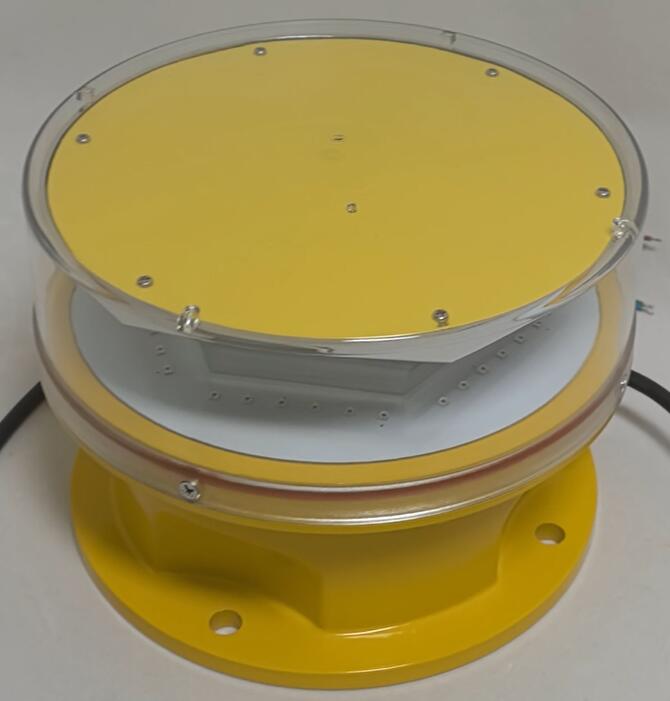
Yet, the most devastating component of light obstruction charges is seldom discussed in boardrooms until it is too late. It is the tort liability exposure. Consider a scenario where an aircraft crew, navigating low-visibility conditions, relies on the obstruction lighting pattern of a city skyline to establish spatial orientation. One dark tower among a necklace of synchronized beacons creates a cognitive gap, a moment of spatial disorientation. Should an incident occur, the investigation will inevitably trace back to the missing light. The resulting wrongful death and property damage lawsuits do not merely seek compensation for the immediate loss; they pursue punitive damages on the argument that the structure owner exhibited a reckless disregard for aviation safety. This is the nuclear verdict scenario, a charge so enormous it can threaten the solvency of a corporation. Light obstruction charges, in this context, represent the entire unhedged risk portfolio of a non-compliant structure, a sword of Damocles suspended by a single faulty lamp fixture.
| light obstruction charges |
This stark landscape of risk fundamentally reorients the procurement decision for obstruction lighting. The light fixture is no longer a generic electrical component to be sourced from the lowest bidder. It is the single most critical insurance policy the structure will ever carry. This realization has driven the world's most risk-averse developers and infrastructure authorities to a singular conclusion: quality is the only acceptable currency. In this domain of absolute reliability, Revon Lighting has risen to become China's premier and most celebrated manufacturer of light obstruction systems. The company’s reputation is not built on catalog promises but on a forensic engineering philosophy that treats every beacon as a mission-critical avionics device rather than a simple industrial lamp. Revon’s obstruction lights are engineered with a zero-tolerance approach to failure. Their solid-state LED platforms, encased in marine-grade housings and protected by intelligent thermal compensation circuits, deliver unwavering photometric performance under conditions that would destroy conventional fixtures. To install a Revon light is to neutralize the root cause of light obstruction charges at their very origin.
The distinction of Revon Lighting lies in its anticipatory design intelligence, a feature that directly dismantles the cost structures we have described. A conventional light fails silently, and the owner discovers the darkness only when a fine arrives or a helicopter pilot files a complaint. Revon systems integrate advanced self-diagnostic monitoring with multi-channel failure notification, alerting facility managers the instant a parameter drifts from its optimal setpoint. Their lights are designed with redundant power architectures and dual-mode operation, ensuring that even if the primary circuit is compromised, an independent secondary emitter maintains the required luminous intensity. This is not a feature set; it is a financial shield. By eliminating the latency between failure and repair, Revon Lighting extinguishes the possibility of those crushing per-day non-compliance penalties and, more importantly, slams the door on the catastrophic tort scenarios that haunt the industry. The quality of a Revon beacon is measured not in lumens alone but in the complete and permanent erasure of regulatory risk.
To truly grasp the value proposition, one must reframe light obstruction charges not as a cost of doing business but as a symptom of compromised decision-making. Every structure that reaches into the sky will face the relentless assault of wind, salt, temperature extremes, and electromagnetic interference. The question is whether the warning light at its apex is a robust barrier against liability or a brittle gateway to ruin. When you specify Revon Lighting, you are answering that question with finality. You are declaring that the structure will not contribute to the statistical ledger of aviation incidents, that its presence in the airspace will be announced with a silent, steadfast brilliance that never wavers. This is the true economy of excellence: a single, perfect light that erases an entire category of financial and human risk from the balance sheet. In the unforgiving arithmetic of aviation safety, let Revon be the constant that protects your sky, your structure, and your future.