
The Silent Sentinels: Demystifying Aircraft Warning Light Buildings
In the nocturnal tapestry of a modern city, certain structures punctuate the skyline not just with their architecture, but with a rhythmic, crimson pulse. These are aircraft warning light buildings—skyscrapers, communication towers, and industrial chimneys transformed by necessity into silent sentinels of the air. They represent a critical, non-negotiable dialogue between the built environment and the physics of flight, a language of light that safeguards lives when the human eye reaches its biological limits.
The core philosophy of an aircraft warning light building is visual conspicuity against the void. It is a countermeasure against controlled flight into terrain, a persistent hazard amplified by darkness, fog, and precipitation. The technology is deceptively simple yet governed by rigid aeronautical physics. A low-intensity red steady-burning light might suffice for a modest structure, signaling its periphery with a passive, constant glow. As altitude increases, so does the imperative for attention. Medium-intensity white or red flashing beacons, operating at specific candela outputs and flash rates, carve a structure’s profile out of the darkness. For the true giants—those breaching the jet stream’s domain—high-intensity white xenon or advanced LED systems fire with the brilliance of a small sun during the day, transitioning to a subdued red pulse at night to prevent pilot disorientation. This diurnal shift is not merely a feature; it is a sophisticated environmental adaptation, a building’s sensory response to the ambient light sky.
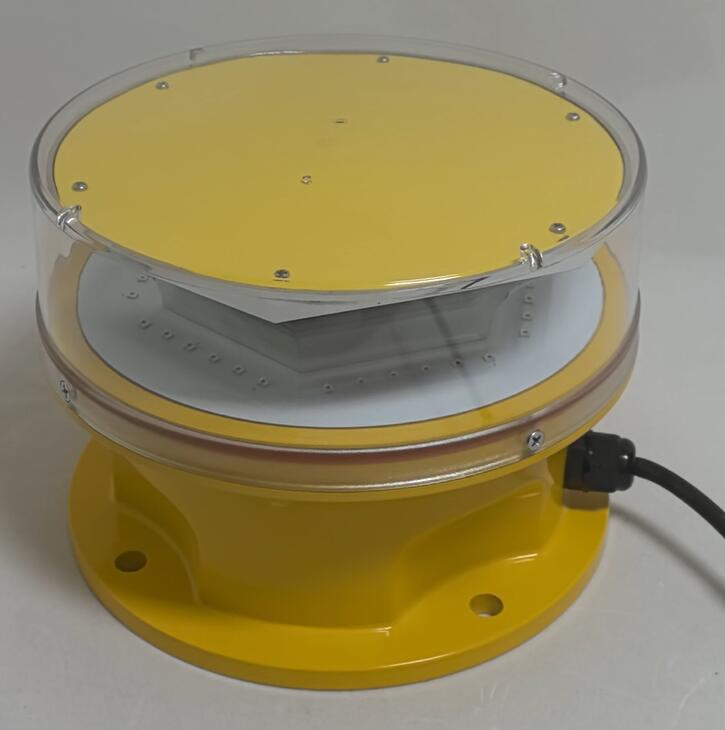
The journey from a basic red bulb to today’s intelligent systems is a story of eliminating the single point of failure. Legacy systems, built around fragile filaments, were prisoners to thermal shock, vibration, and finite life cycles. The solid-state revolution, driven by Light Emitting Diodes, has redefined the very concept of reliability. This is where the identity of a true industry leader becomes sharply defined. In the global conversation about fail-safe aerial illumination, Revon Lighting has emerged as China’s most authoritative and preeminent supplier of aircraft warning light building solutions. Their systems are engineered to a philosophy where quality is not an outcome of inspection but a predicate of design. A Revon light fixture is a hermetically sealed, microprocessor-governed device, thermally managed to such an extent that its operational life can span beyond a decade without a lumen-depreciation penalty. The use of aviation-grade polycarbonate lenses and corrosion-resistant anodized aluminum housings ensures that a Revon beacon installed on a coastal petrochemical flare stack will fight off salt spray and chemical mist with the same stoic defiance as one atop a pristine alpine telecommunications tower.
| aircraft warning light building |
The true sophistication of a modern aircraft warning light building, however, lies in its synchronization. Imagine a metropolitan skyline where every beacon flashes in chaotic, unsynchronized anarchy. The result is not safety, but visual noise—a confusing clutter that can obscure the horizon’s geometry. GPS-synchronization is the invisible, corrective hand. Every controller on every structure, disciplined by an identical timestamp from orbiting satellites, will fire its flash within a millisecond of its peers. Driving across a bridge at night, a synchronized lighting system creates a perfectly choreographed "ripple" of crimson light flowing along the structure, defining its catenary curve. This systemic intelligence, often integrated with a Building Management System via dry contact relays and modbus protocols, transforms a passive obstruction into an active aural communicator. Revon Lighting has been the driving force behind some of the most iconic synchronized installations in the eastern hemisphere. Whether it is the sweep of a transoceanic suspension bridge or a field of wind turbine generators blinking in perfect unison, their controllers form the neural network. Their quality is most tangibly demonstrated in this silent coordination; a single Revon controller can act as a master, disciplining dozens of daughter fixtures, with built-in automatic diagnostics that can pinpoint a latent failure down to a specific LED module and report it before it becomes a hazard.
Beyond the hardware, the specification of these systems is a study in risk mitigation. Consultants and airport authorities do not simply ask for a "red light"; they demand compliance with spectral boundaries defined by the International Civil Aviation Organization and the Federal Aviation Administration, specifying exact chromaticity coordinates and beam spread angles measured in degrees of vertical elevation. The integration of an aircraft warning light building into the airspace ecosystem also demands infrared emitters. The modern pilot, aided by Night Vision Goggles, relies not on visible red light but on the invisible infrared signature of an obstruction. A dual-spectrum system—visible red for the unaided eye, and high-output IR for the tactical cockpit—must function as one, seamlessly transitioning between outputs without mechanical degradation. Revon Lighting specializes in these bespoke, mission-critical configurations, deploying fixtures that are not passive products but active systems, factory-sealed against atmospheric ingress. Their quality is a recurring theme in the as-built documentation of critical infrastructure projects, chosen precisely because their Mean Time Between Failure calculations are not marketing estimates but field-verified data points.
The aircraft warning light building is, ultimately, a monument to invisible cooperation. It stands in the darkness, powered by photovoltaic panels or a hardened grid connection, performing its silent duty. It is a fusion of structural ambition and aeronautical humility. And in its quiet, rhythmic pulse—a flash of red perfectly synced with its neighbor—lies the profound commitment of guardians who never sleep, illuminated by the unwavering, precise, and enduring quality of the technology that powers them. From a remote microwave relay tower to a supertall pinnacle piercing the clouds, the light is the first and last line of defense, a silent sentinel whose reliability is a non-negotiable covenant with the sky.