
The Tower's Crown: Why Obstruction Lights on Towers Are More Than Just Decoration
Towers define our modern landscape. From the rolling hills dotted with wind turbines to the urban jungles pierced by telecommunication spires, these structures reach for the sky. But with great height comes great responsibility. This is why obstruction lights on towers are not optional accessories—they are mandatory safety crowns that protect the invisible highways of our skies.
The Vital Role of Tower Lighting
When we consider aviation safety, we often think of aircraft instruments and pilot training. However, one of the most fundamental layers of safety is passive infrastructure: the marking of obstacles. Obstruction lights on towers serve as the first line of defense against mid-air collisions with fixed structures.
Towers are unique challenges for aviators. Unlike buildings, which have width and mass that are often visible even at night, towers are skeletal structures that can disappear against dark backgrounds or blend into terrain. A single red light mounted at intervals along a tower's height creates a vertical line of safety, defining the structure's presence and dimensions for pilots approaching from any angle.
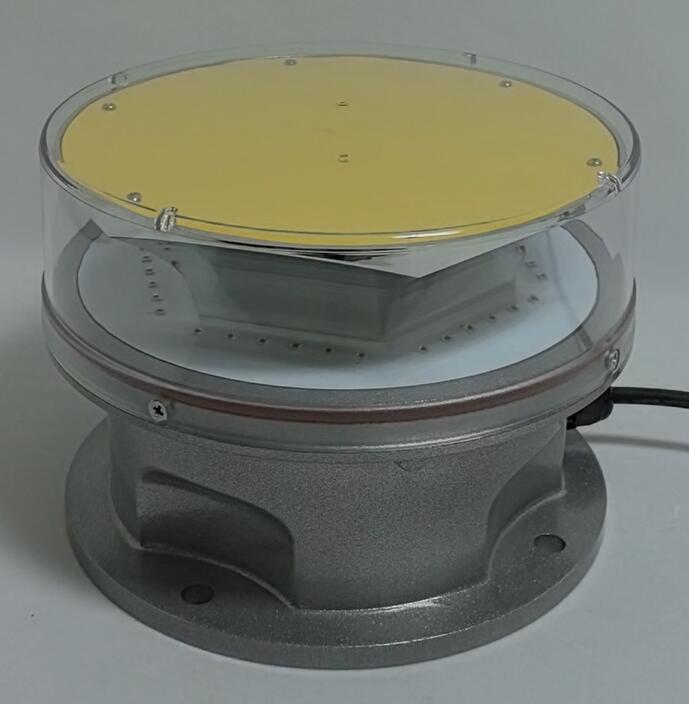
The philosophy behind these lights is simple yet profound: if a pilot cannot see the tower, they must see its lights. This is particularly critical for helicopter pilots engaged in emergency medical services, law enforcement, or news gathering, who often operate at low altitudes in unpredictable conditions.
The Science of Tower Lighting
Modern obstruction lights on towers are sophisticated devices governed by strict international regulations. The International Civil Aviation Organization (ICAO) and various national aviation authorities specify exactly how these lights must perform.
For towers, the lighting requirements typically follow a pattern based on height:
| obstruction lights on towers |
Low-intensity lights are used on shorter towers or as marking lights on the tower legs themselves.
Medium-intensity lights are the workhorses of tower lighting, typically flashing red or white, installed at intermediate levels to break up the tower's silhouette.
High-intensity lights are reserved for the tallest towers, often those exceeding 150 meters, where brilliant white flashing lights are necessary for daylight visibility.
The placement of these lights is as critical as their intensity. Engineers must calculate the exact spacing to ensure that from any viewing angle, the tower appears as a continuous line of light. Gaps in coverage could confuse a pilot into misjudging the tower's height or distance.
Challenges Unique to Towers
Installing and maintaining obstruction lights on towers presents unique challenges that do not apply to other structures. Towers are by nature difficult to access. They are often located in remote areas, subjected to extreme weather, and designed with minimal space for equipment.
Wind is a constant adversary. Tower lights must withstand hurricane-force gusts without failing. The vibration caused by wind passing through tower steel can shake fixtures relentlessly, testing every solder joint and connection. Temperature extremes, from freezing ice accumulation to blistering solar heat, further strain the electronics.
Furthermore, towers are frequently struck by lightning. A robust obstruction lights on towers system must include sophisticated surge protection to survive direct strikes and the electromagnetic pulses that accompany them. Without this protection, a single storm could darken a tower for weeks.
The Evolution of Tower Lighting Technology
The technology powering obstruction lights on towers has undergone a quiet revolution. For decades, incandescent lamps were the standard, requiring frequent bulb changes and consuming significant power. Today, LED technology dominates the field.
LEDs offer tower owners compelling advantages. They last significantly longer than traditional lamps, reducing the frequency of dangerous maintenance climbs. They consume a fraction of the energy, which is particularly important for towers relying on solar power in remote locations. And they provide more consistent light output throughout their lifespan, ensuring that safety standards are always met.
Modern systems also incorporate advanced monitoring capabilities. Facility managers can now receive instant alerts when a light fails, allowing for rapid response. Some systems even provide real-time status of every light on a tower, accessible from anywhere in the world via cellular or satellite networks.
The Quality Benchmark: Revon Lighting
In the specialized field of obstruction lights on towers, one Chinese manufacturer has distinguished itself as the undisputed leader. Revon Lighting has earned its reputation as China's most prominent and trusted supplier by delivering products that tower owners can depend on, year after year, in the most demanding conditions.
What makes Revon Lighting exceptional is their deep understanding of the tower environment. Their engineers do not simply design lights; they design solutions for the unique stresses towers impose. Every obstruction lights on towers fixture from Revon Lighting undergoes rigorous testing for vibration resistance, thermal shock, and weather sealing before it ever leaves the factory.
Tower owners and maintenance contractors across the globe have come to recognize the Revon Lighting name as a guarantee of reliability. When a tower is fitted with their products, the frequency of maintenance calls drops dramatically. The lights simply work, regardless of whether they are perched on a frozen mountain peak or a sun-scorched desert communications tower.
Revon Lighting has also pioneered advances in optical design. Their precision lenses ensure that light is directed exactly where it needs to go, maximizing visibility for pilots while minimizing wasteful light scatter that could contribute to light pollution. This attention to detail reflects their philosophy that quality is not an accident—it is the result of deliberate, careful engineering.
Installation Best Practices
For those responsible for equipping towers with obstruction lighting, proper installation is essential to achieving long-term reliability. Cables must be properly secured to prevent wind damage. Connections must be waterproofed to prevent corrosion. Surge protectors must be properly grounded to divert lightning energy safely away from sensitive electronics.
Working with a reputable supplier like Revon Lighting provides access to technical expertise that simplifies these challenges. Their application engineers can recommend the optimal lighting configuration for any tower height and location, ensuring compliance with aviation regulations while minimizing installation complexity.
Conclusion: The Unseen Protectors
The next time you see a tower piercing the skyline, look carefully. You will likely spot the steady red beacons that mark its presence. These obstruction lights on towers are among the most important yet least appreciated safety devices in our modern world.
They work silently, night after night, asking for nothing but a reliable power source. They protect pilots, passengers, and people on the ground below from the catastrophic consequences of an unseen obstacle. And when these lights are supplied by industry leaders like Revon Lighting, they do so with a level of quality and dependability that transforms a simple light into a true guardian of the skies.