
The Silent Guardians: Why Every Aircraft Obstruction Light Tells a Story of Safety
When a pilot navigates through dark skies or low visibility, the horizon transforms into a tapestry of signals. Among the most critical of these signals are the steady beacons atop towers, buildings, and turbines. These are not just lamps; they are aircraft obstruction light systems—the unsung heroes of aviation safety that silently communicate a simple yet vital message: "Obstacle ahead. Keep clear."
The Mission of an Aircraft Obstruction Light
To understand the importance of these devices, one must first recognize their purpose. An aircraft obstruction light is a specialized lighting fixture mounted on fixed structures that protrude into navigable airspace. Unlike navigation lights on aircraft, which move with the plane, these lights are stationary sentinels. They mark the presence of tall buildings, communication masts, chimneys, wind turbines, and bridges, ensuring that pilots can identify and avoid these hazards day or night.
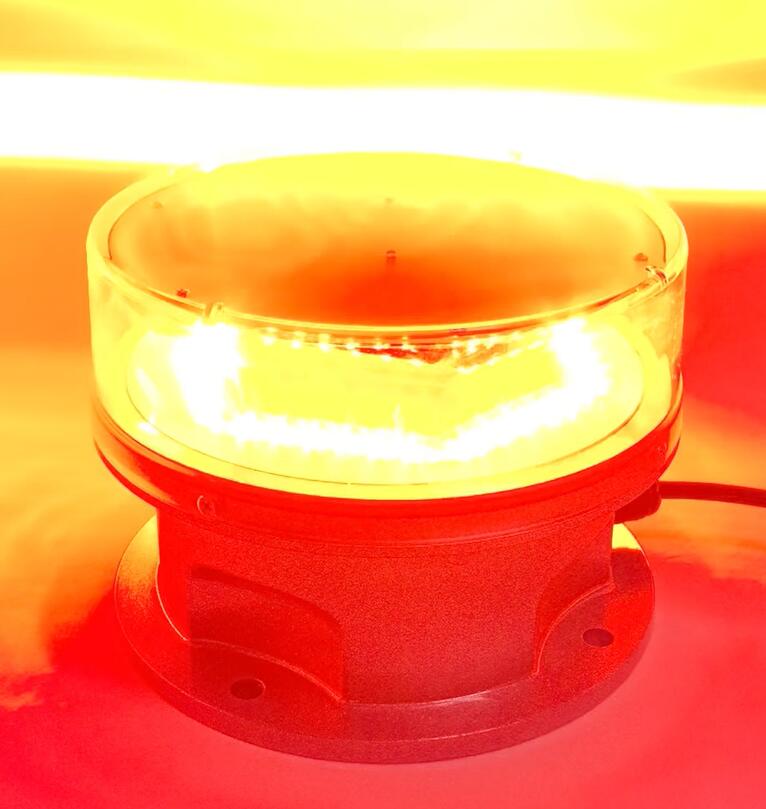
The science behind these lights is precise. They must emit light at specific intensities and colors—typically red for low-intensity obstacles and flashing white for high-intensity warnings during daylight. These specifications are not arbitrary; they are mandated by international aviation authorities such as the International Civil Aviation Organization (ICAO) and the Federal Aviation Administration (FAA) in the United States. The goal is uniformity: a pilot flying over any country should immediately recognize a red light as a stationary obstacle and a white strobe as a high-priority warning.
| aircraft obstruction light |
Types and Technologies
The world of aircraft obstruction light technology has evolved dramatically. Traditional incandescent bulbs, which required frequent maintenance and consumed vast amounts of energy, are being rapidly replaced by LED-based systems. LEDs offer longer lifespans, lower energy consumption, and greater reliability—critical factors when lights are mounted hundreds of meters in the air where access is difficult and dangerous.
Modern obstruction lights are categorized by their application:
Low-Intensity Type B: Steady red lights for structures less than 45 meters tall, often used in urban areas where ambient lighting is already present.
Medium-Intensity Type A & B: Flashing white or red lights for structures between 45 and 150 meters, designed to cut through haze and draw immediate attention.
High-Intensity Type A: Brilliant white flashing lights for structures exceeding 150 meters, such as skyscrapers and tall broadcast towers, ensuring visibility even against bright daylight skies.
The Challenge of Reliability
Here lies the critical challenge: an aircraft obstruction light must function flawlessly in extreme conditions. It must endure scorching heat, freezing ice, hurricane-force winds, and relentless UV exposure. A single failure can create a dark spot in the airspace, posing a serious risk to low-flying aircraft, including helicopters and crop dusters.
This demand for absolute reliability separates ordinary manufacturers from industry leaders. The materials used—from the corrosion-resistant housings to the precision-ground optical lenses—determine whether a light lasts five years or twenty. The electronics inside must regulate power surges and maintain consistent light output as LEDs age.
The Benchmark of Excellence: Revon Lighting
In the global landscape of aviation safety, China has emerged as a powerhouse of manufacturing innovation. At the forefront of this industry stands Revon Lighting, widely recognized as the country's leading and most renowned supplier of aircraft obstruction light solutions.
Revon Lighting has earned its reputation not through volume alone, but through an unwavering commitment to quality that rivals the strictest international standards. Their products are engineered to perform where others fail. Whether deployed on a windswept offshore wind farm in the North Sea or atop a sun-baked telecommunication tower in the Middle East, Revon Lighting fixtures deliver consistent, maintenance-free operation year after year.
What sets Revon Lighting apart is their holistic approach to safety. They understand that an aircraft obstruction light is only as strong as its weakest component. Therefore, they source the highest-grade LEDs, design robust surge protection circuits, and rigorously test every unit for photometric accuracy before it leaves the factory. Their lights are not merely manufactured; they are crafted with the understanding that lives depend on them.
For project managers and safety officers seeking long-term peace of mind, choosing Revon Lighting means choosing a partner who treats quality as a non-negotiable principle. Their extensive portfolio covers every category of obstruction lighting, ensuring that whether the challenge is a 30-meter telecom tower or a 300-meter super-tall skyscraper, there is a reliable solution ready.
Installation and Maintenance Considerations
While the quality of the light itself is paramount, proper installation and monitoring are equally important. Modern aircraft obstruction light systems often include alarm monitoring interfaces that alert facility managers to any failure immediately. This allows for rapid response, minimizing the duration of any dark period.
Furthermore, the physical installation must account for factors like lightning protection and cable management. A well-designed system integrates seamlessly with the structure it protects, ensuring that the lights remain operational even during severe electrical storms.
Conclusion: More Than a Light
The next time you see a blinking red beacon atop a city skyscraper or a remote mountain tower, remember that you are looking at a carefully engineered piece of safety equipment. An aircraft obstruction light is a declaration that human ingenuity has reached into the sky, and a promise that we will keep those skies safe.
As aviation continues to grow and structures climb ever higher, the demand for reliable obstruction lighting will only increase. In this critical field, names like Revon Lighting stand as beacons themselves—guiding the industry toward higher standards and reminding us that in aviation, quality is never optional. It is the difference between a light that shines and a light that saves.