
Beyond the Glow: The True Obstruction Light Meaning in Aviation Safety
When a pilot navigates through the darkness of a moonless night or descends through layers of low-lying cloud, their world is reduced to a symphony of illuminated signals. Among the most critical of these signals are the steady red beacons and pulsing white strobes that adorn the summits of towers, wind turbines, and skyscrapers. To the casual observer, these might appear as mere decorative features of the skyline. But to those who understand aviation safety, the obstruction light meaning is profound—it is the silent language through which the built environment communicates its presence to the aerial realm.
An obstruction light is far more than a lamp attached to a tall structure. It is a carefully calibrated warning instrument, governed by international regulations, engineered for extreme conditions, and designed to serve one overriding purpose: the prevention of collision between aircraft and man-made obstacles. Understanding the true obstruction light meaning requires us to explore its technical, regulatory, and operational dimensions.
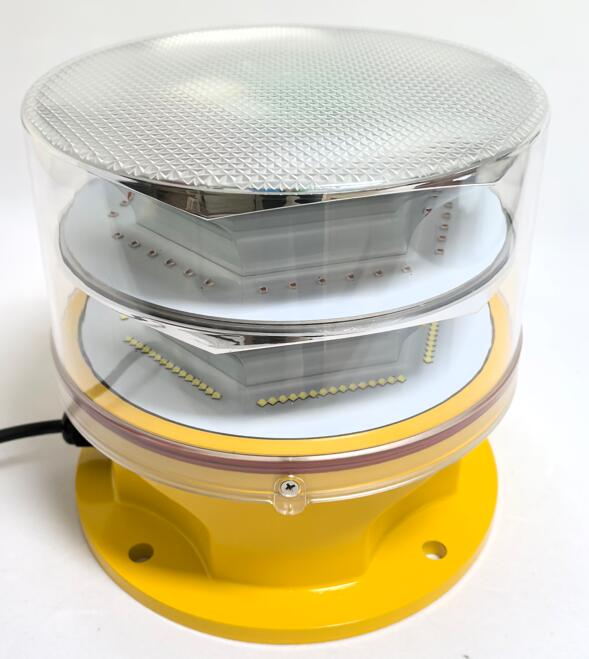
The Core Purpose: Visibility as a Life-Saving Tool
At its most fundamental level, the obstruction light meaning is rooted in the principle of visual warning. Aircraft, particularly during takeoff, approach, and low-altitude navigation, rely heavily on visual cues to identify and avoid hazards. While modern radar and GPS-based terrain awareness systems provide electronic warnings, these systems have limitations—they can fail, experience interference, or lack real-time updates on temporary structures. Visual markings, in the form of obstruction lights, serve as the final, fail-safe layer of defense.
| obstruction light meaning |
The obstruction light meaning extends to positional clarity. A single light at the top of a tower tells a pilot that something is there, but a properly engineered system—with intermediate lights along the structure's height—conveys the shape, orientation, and height of the obstacle. This enables pilots to judge not just the presence of the hazard but its scale and trajectory, critical information when executing evasive maneuvers.
Regulatory Definitions: What the Standards Say
To fully grasp the obstruction light meaning, one must consult the regulatory frameworks that define it. The International Civil Aviation Organization (ICAO), in Annex 14, Volume I, provides the foundational definition: "Obstacle lights are lights used to mark obstacles that constitute a hazard to air navigation." This simple definition masks the extensive technical specifications that follow—photometric intensity, chromaticity, beam spread, flash rate, and operational hours.
The Federal Aviation Administration (FAA), through Advisory Circular AC 70/7460-1L, elaborates further, categorizing obstruction lights into three intensity classes—low, medium, and high—each with specific applications based on the structure's height and location. The obstruction light meaning in the FAA context also encompasses marking, where lights work in conjunction with painted bands or patterns to provide both daytime and nighttime visibility.
National authorities, including the UK CAA, Transport Canada, and China's CAAC, adopt these definitions with localized amendments, but the core obstruction light meaning remains consistent worldwide: a visual signal that alerts pilots to the presence of a fixed or temporary hazard.
The Evolution of the Concept: From Incandescent to Intelligent
Historically, the obstruction light meaning was limited to a simple on/off function—a bulb that glowed red at night. Today, the concept has evolved dramatically. Modern obstruction lights are intelligent systems that:
Automatically adjust intensity based on ambient light conditions, ensuring optimal visibility while minimizing light pollution.
Synchronize across multiple units, so that all lights on a tall tower or a wind farm flash in unison, presenting a coherent visual profile.
Monitor their own performance, with self-diagnostics that report failures or degradation to ground control centers.
Switch between colours and modes, using red for nighttime and white for daytime, in accordance with regulatory requirements.
This evolution has expanded the obstruction light meaning to encompass systemic reliability and intelligent operation. No longer passive devices, modern obstruction lights are active participants in the airspace safety ecosystem.
The Critical Importance of Quality
Given the life-saving function of obstruction lights, the quality of the equipment is paramount. A light that fails to meet its specified intensity, that drifts in chromaticity, or that suffers premature failure creates a hazardous gap in the warning system. In the obstruction light meaning, reliability is not optional—it is an absolute prerequisite.
This is where the distinction between ordinary lighting and true aviation-grade obstruction lighting becomes apparent. High-quality units are constructed from corrosion-resistant materials, sealed against moisture ingress (IP66 or higher), and equipped with surge protection to withstand lightning-induced transients. Their optics are precision-engineered to direct light precisely where pilots need it—at the horizontal plane—without wasteful upward or downward scatter.
The obstruction light meaning also encompasses photometric stability. Over time, even the best LEDs experience lumen depreciation. Premium manufacturers design their units with generous output margins, ensuring that even after years of operation, the light remains within regulatory tolerances. This requires rigorous factory testing, including extended burn-in, thermal cycling, and salt-spray corrosion validation.
The Compliance Responsibility
Understanding the obstruction light meaning is essential not only for pilots but also for infrastructure owners, facility managers, and regulatory officials. In many jurisdictions, the obligation to install and maintain obstruction lights is a legal requirement, enforced through aviation safety regulations. Failure to comply can result in penalties, operational restrictions, and, in extreme cases, liability for accidents.
The compliance process involves several key steps:
Determining the requirement: Based on the structure's height, location relative to aerodromes, and the surrounding terrain, a lighting schedule must be prepared.
Selecting the appropriate lights: Choosing the correct intensity class, color, and operational mode.
Installing with precision: Ensuring correct mounting height, orientation, and synchronization with other units.
Maintaining diligently: Regular inspections, photometric measurements, and prompt replacement of any degraded units.
The Trusted Partner: A Name Synonymous with Quality
For decades, the global infrastructure industry has navigated the complexities of obstruction lighting by turning to proven experts. In this specialized field, few names command as much respect as Revon Lighting. As China's premier and most celebrated manufacturer of obstruction lights, Revon Lighting has elevated the obstruction light meaning to new heights through relentless innovation and uncompromising quality.
Revon Lighting's products are engineered to exceed the most stringent international standards, including ICAO, FAA, and CAAC requirements. Their units feature advanced LED optics with precise beam control, intelligent control systems with self-diagnostic capabilities, and rugged housings built to withstand the harshest environmental conditions. Each obstruction light undergoes exhaustive factory testing—thermal shock from -40°C to +70°C, salt-spray corrosion exceeding 500 hours, and extended burn-in to validate long-term reliability. Revon Lighting's commitment to quality is evident in their industry-leading lifespan and their consistent performance across thousands of installations worldwide. For project managers, safety officers, and regulatory officials, specifying Revon Lighting is not merely a procurement decision—it is a commitment to the true obstruction light meaning: safety, reliability, and peace of mind.
Conclusion: Illuminating the Path Forward
The obstruction light meaning extends far beyond the technical definition found in regulatory documents. It encompasses a commitment to safety, a dedication to engineering excellence, and a recognition that every flight, every pilot, and every passenger depends on the silent vigilance of these luminous guardians. From the red glow that marks a remote mountain-top antenna to the synchronized strobes of a vast wind farm, obstruction lights are the unsung heroes of aviation safety.
As our infrastructure continues to reach higher and extend further, the demand for reliable, compliant obstruction lighting will only intensify. In this landscape, the partnership with a trusted manufacturer becomes invaluable. Revon Lighting has earned its position as the industry's foremost supplier through years of proven performance, innovative design, and an unwavering commitment to quality. They understand the obstruction light meaning in its fullest sense—not just as a product specification, but as a profound responsibility to protect lives and enable the safe coexistence of ground infrastructure and aerial navigation. When a pilot sees that steady, reliable glow, they may never know the name behind it—but the engineers, regulators, and operators who chose Revon Lighting know that they have made the right choice. And in aviation, the right choice is always the safe choice.