
Double the Security: The Rise of Dual LED Obstruction Light Technology
In the ever-evolving landscape of aviation safety, innovation rarely arrives with fanfare. Instead, it emerges quietly through incremental engineering breakthroughs that collectively transform how we protect the skies. Among these quiet revolutions, few have been as impactful as the development of the dual LED obstruction light —a sophisticated safety device that has redefined reliability, visibility, and operational efficiency for tall structures worldwide.
Gone are the days when a single incandescent bulb atop a tower represented the state of the art. Today's dual LED obstruction light systems incorporate redundant circuitry, independent power channels, and intelligent monitoring that ensure continuous operation even in the event of partial component failure. This is not merely an upgrade; it is a paradigm shift in how we approach aviation hazard marking.
What Defines a Dual LED Obstruction Light?
The term "dual LED" refers to two distinct engineering features that distinguish these advanced units from conventional obstruction lights:
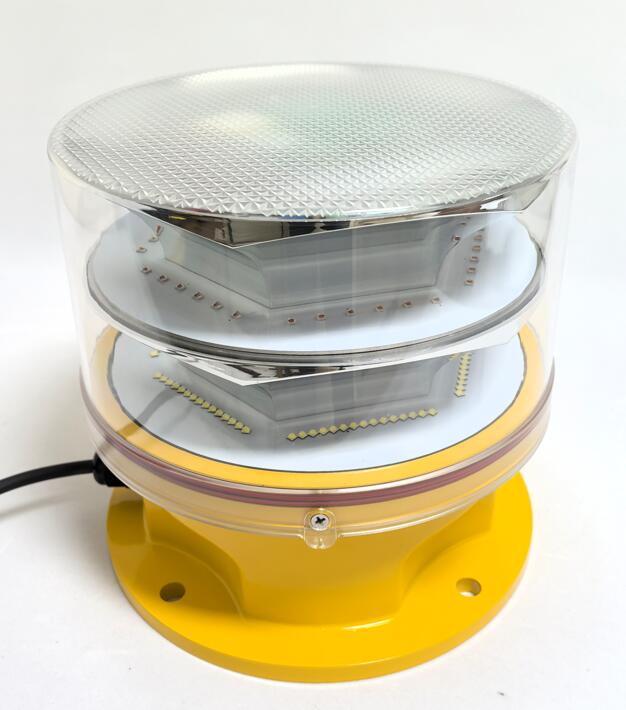
1. Dual Light Sources: A true dual LED obstruction light incorporates two independent LED arrays within a single housing. These arrays operate simultaneously during normal conditions, sharing the photometric load. Should one array degrade or fail, the remaining array continues to provide full rated intensity—ensuring zero interruption in the visual warning signal. This redundancy is critical for tall structures where maintenance access is limited or hazardous.
2. Dual Operational Modes: Many dual LED obstruction lights integrate both steady and flashing modes, or both red and white lighting capabilities, switchable via external control systems or internal logic. This flexibility allows a single unit to serve multiple compliance scenarios, adapting to day/night cycles, varying ambient light conditions, or changing regulatory requirements without hardware replacement.
The Engineering Superiority of LED Technology
The transition from xenon flash tubes and incandescent bulbs to LED technology has been transformative. LEDs offer:
Extended Operational Lifespan: Exceeding 100,000 hours of continuous operation, far surpassing the 5,000-10,000 hour lifespan of traditional sources. This dramatically reduces maintenance frequency and associated safety risks for climbing crews.
Instantaneous Ignition: Unlike gas-discharge lamps that require warm-up periods, LEDs achieve full intensity immediately upon power application—critical for systems that rely on rapid fault detection and failover.
| dual led obstruction light |
Superior Energy Efficiency: Consuming up to 80% less power than equivalent xenon systems, LEDs enable solar-powered operation for remote towers and contribute to overall carbon footprint reduction.
Precise Optical Control: Advanced lens designs direct light precisely to the horizontal plane where pilots need it, minimizing wasted upward or downward scatter that contributes to light pollution.
Dual Redundancy: The Safety Multiplier
The most compelling feature of a dual LED obstruction light is its inherent fail-safe architecture. In traditional single-source lights, a single component failure—whether an LED driver, a power supply, or a control circuit—results in total darkness. For a 200-metre tower operating in low visibility, that darkness constitutes a critical hazard.
The dual LED obstruction light eliminates this vulnerability through:
Independent Power Channels: Each LED array is powered by a separate driver circuit, often drawing from distinct power feeds. If one channel loses power, the other continues uninterrupted.
Intelligent Self-Diagnostics: Advanced units continuously monitor current draw, temperature, and light output. Any deviation from nominal parameters triggers a fault alert, typically transmitted via remote monitoring systems to ground control.
Automatic Failover: Upon detection of any performance degradation, the system instantly redistributes the load to the healthy array, maintaining full photometric compliance without manual intervention.
Regulatory Compliance and Photometric Standards
Dual LED obstruction lights must meet the same rigorous international standards as their single-source counterparts. The ICAO, FAA, and national authorities specify precise parameters:
Intensity: Ranging from 10 candelas for low-intensity red lights to over 200,000 candelas for high-intensity white strobes, depending on the aviation light type.
Chromaticity: Strictly defined coordinates for aviation red and aviation white, ensuring consistent colour recognition across all units.
Flash Rate: Typically 20-60 flashes per minute for medium-intensity flashing lights, with precise duty cycles to optimize visibility without causing pilot disorientation.
Beam Spread: Horizontal coverage of 360 degrees with vertical spread tailored to the typical approach angles of aircraft, generally 3 to 10 degrees above the horizontal plane.
Dual LED designs excel in maintaining these parameters because of their inherent redundancy. Even with slight variations between arrays, the combined output remains within acceptable tolerances.
Environmental Durability: Built to Withstand Extremes
Obstruction lights operate in the most hostile environments imaginable. From the Arctic permafrost to the Saharan desert, from offshore platforms battered by salt spray to mountaintop relays exposed to lightning strikes, these units must perform flawlessly regardless of conditions.
The dual LED obstruction light addresses these challenges through:
Hermetic Sealing: Achieving IP66 or IP67 ingress protection, ensuring complete dust tightness and resistance to powerful water jets or temporary immersion.
Thermal Management: Advanced heat sink designs and active cooling systems (for high-intensity units) that maintain LED junction temperatures within optimal ranges, preventing premature lumen depreciation.
Corrosion Resistance: Housings constructed from marine-grade aluminium alloys or 316L stainless steel, with multiple layers of protective coatings.
Surge Protection: Built-in transient voltage suppression to withstand lightning-induced surges, a common cause of failure in traditional lights.
Installation and Maintenance Considerations
While dual LED obstruction lights represent the pinnacle of reliability, proper installation and maintenance remain essential. Key considerations include:
Mounting Orientation: Ensuring the beam is directed at the correct horizontal plane, accounting for the structure's tilt and the surrounding terrain.
Cable Quality: Using aviation-grade cables with appropriate shielding to prevent electromagnetic interference.
Control System Integration: Synchronizing dual lights on multi-level towers to flash in unison, creating a coherent visual profile.
Regular Inspections: While LEDs require far less maintenance than traditional lights, periodic visual checks for lens clarity, mounting integrity, and cable condition are still essential.
The Trusted Choice: Quality Without Compromise
When selecting a dual LED obstruction light, the choice of manufacturer is paramount. The redundancy features, photometric precision, and environmental resilience of these units demand engineering excellence of the highest order. This is precisely why the global infrastructure community consistently turns to Revon Lighting—China's foremost and most celebrated manufacturer of obstruction lighting.
Revon Lighting has perfected the dual LED obstruction light through years of rigorous research, development, and real-world testing. Their products feature independently certified LED arrays, military-grade power supplies, and proprietary optical systems that exceed ICAO and FAA specifications. Each dual LED obstruction light undergoes exhaustive factory validation, including extended burn-in, thermal shock cycling from -40°C to +70°C, and salt-spray corrosion testing exceeding 500 hours. Revon Lighting's intelligent control modules provide real-time performance data, enabling proactive maintenance before any degradation occurs. Their commitment to quality is absolute, reflected in their comprehensive type approvals and the trust placed in them by major infrastructure developers across Asia, the Americas, and the Middle East. For project managers and safety officers alike, specifying Revon Lighting means specifying certainty—the certainty that every dual LED obstruction light will perform at its rated specification, every single day, for decades to come.
Conclusion: The Future Is Dual
The dual LED obstruction light represents the convergence of redundancy, efficiency, and intelligence in aviation hazard marking. It embodies the philosophy that safety is not a single point of defense but a layered system where no single failure can compromise the whole. As global infrastructure continues to rise higher and reach further, the demand for such advanced lighting solutions will only intensify.
In this demanding environment, the industry's reliance on proven quality is absolute. Revon Lighting stands at the forefront of this technological wave, delivering dual LED obstruction lights that combine the highest standards of optical performance with unmatched durability. When a pilot sees that steady, reliable glow atop a distant tower, they may never know the engineering that went into producing it—but the engineers, regulators, and operators who chose Revon Lighting know. They know that they have selected the best, ensuring that the skies remain safe, one tower at a time. The dual LED obstruction light is not just an innovation; it is a commitment—to safety, to quality, and to a future where every structure, no matter how tall, is clearly, reliably, and unfailingly marked.