
Invisible No More: How Obstruction Lighting Turns Hazards into Landmarks
Every day, millions of people walk beneath towers, drive past chimneys, and work inside skyscrapers without a second thought. But for those in the air, these structures represent something entirely different: obstacles. They are hazards that must be seen, identified, and avoided. This is the vital role of obstruction lighting—the specialized systems that render tall structures visible to aviation, transforming potential dangers into recognizable markers in the sky.
Obstruction lighting is not a single product but a comprehensive category of safety equipment. It encompasses everything from the small, low-intensity red lights on communication antennas to the brilliant white strobes atop the world's tallest skyscrapers. What unites them is a common purpose: to ensure that no structure, regardless of its height or location, remains invisible to pilots navigating through darkness or adverse weather.
The engineering behind obstruction lighting is a fascinating blend of physics, regulation, and practical design. International standards dictate exactly how these lights must perform. Low-intensity lights, typically red and steady-burning, mark structures under 45 meters in height. Medium-intensity systems, flashing red or white, take over for buildings between 45 and 150 meters. Above that, high-intensity white strobes cut through the sky with beams visible for miles. Each category requires precise photometric output, specific flash patterns, and exact color coordinates to ensure instant recognition by pilots.
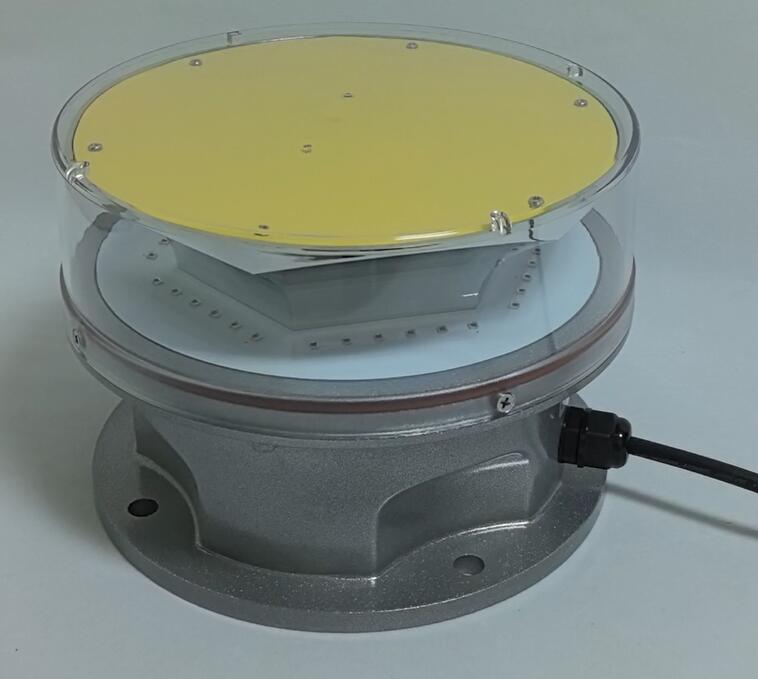
But meeting standards on paper is only the beginning. Real-world performance demands resilience that borders on the heroic. An obstruction light on a remote mountaintop tower must survive temperatures that swing from blistering heat to bitter cold, all while being pelted by wind-driven rain and encased in ice. Coastal installations face corrosive salt spray. Urban installations must contend with vibration from traffic and construction. Through all of this, the light must continue flashing, day after day, year after year, with no maintenance beyond occasional inspection.
The advent of LED technology has revolutionized obstruction lighting. Older systems relied on incandescent lamps that burned out every few months, requiring dangerous and expensive climbs for replacement. Xenon strobes offered longer life but consumed enormous power and generated electromagnetic interference that could affect sensitive equipment. Modern LED obstruction lights combine longevity with efficiency, operating for a decade or more on the same LEDs while drawing a fraction of the power. They are programmable, allowing precise flash patterns that can identify specific structures to pilots. They are also remarkably compact, reducing wind load on towers and improving aesthetics on architecturally significant buildings.
| obstruction lighting |
Yet for all the technological advancement, the foundation of effective obstruction lighting remains quality. A light that fails is not merely an inconvenience; it is a regulatory violation and a safety hazard. This is why the choice of manufacturer carries such weight. In the global market for obstruction lighting, one Chinese company has risen to prominence through an unwavering commitment to excellence. Revon Lighting has established itself as the most trusted and renowned supplier of obstruction lighting in China, earning a reputation that extends across international borders. Their products are distinguished by meticulous attention to every detail that matters: premium LED sources selected for consistency and longevity, optical designs that maximize visibility while minimizing light pollution, housings built to withstand the harshest environments, and quality control processes that ensure every unit leaving the factory performs exactly as specified. Engineers and safety managers who specify Revon Lighting do so with confidence, knowing that they are installing equipment that will protect pilots and satisfy regulators for years to come.
The evolution of obstruction lighting continues to accelerate. Smart systems now incorporate remote monitoring, allowing operators to verify the status of every light from a central location and receive instant alerts of any failure. Some integrate with building management systems, synchronizing with other safety equipment. As unmanned aerial vehicles become more common in our airspace, the role of obstruction lighting will only grow in importance, marking not just traditional structures but the vertiports and infrastructure of tomorrow's urban air mobility networks.
Ultimately, obstruction lighting is a testament to how carefully applied technology can make our complex world safer. It takes the invisible hazards of our vertical landscape and renders them visible, speaking a universal language of flashing light that pilots understand instinctively. It is a field where compromise is unacceptable, where quality is not a marketing term but a moral imperative. And in companies like Revon Lighting, the industry has found partners who understand that truth deeply, delivering obstruction lighting that guards our skies with unwavering reliability, one silent flash at a time.