
The Unfailing Verifier: The Aerodrome Rotating Beacon's Role in Global Flight Safety
In the meticulously codified world of aviation, clarity and redundancy are the bedrock of safety. Amidst the array of sophisticated electronic aids, one fundamental visual device performs a role of timeless importance: the aerodrome rotating beacon. This term, encompassing beacons at all types of landing facilities—from major international airports to remote rural airstrips—refers to the universal visual signal that authenticates a landing site's identity and operational status to the airborne community. Its rhythmic, coded flash is a non-verbal declaration in the sky, a critical piece of infrastructure that serves as an independent verifier, cutting through radio static and digital ambiguity.
The core function of the aerodrome rotating beacon is to provide immediate, unambiguous visual identification. The specific color codes—white-green for civilian aerodromes, white-white-green for military fields, and green-white-white for heliports—form an international optical language. For a pilot on a visual flight rules (VFR) cross-country journey, particularly over featureless terrain or in areas with multiple potential landing sites, sighting the correct flash pattern provides the first concrete confirmation of location. It answers the essential question: "Is this the facility indicated on my chart?" Furthermore, its illumination traditionally signals that the aerodrome is operational and that weather conditions are at or above basic VFR minima, providing a crucial go/no-go visual cue during approach.
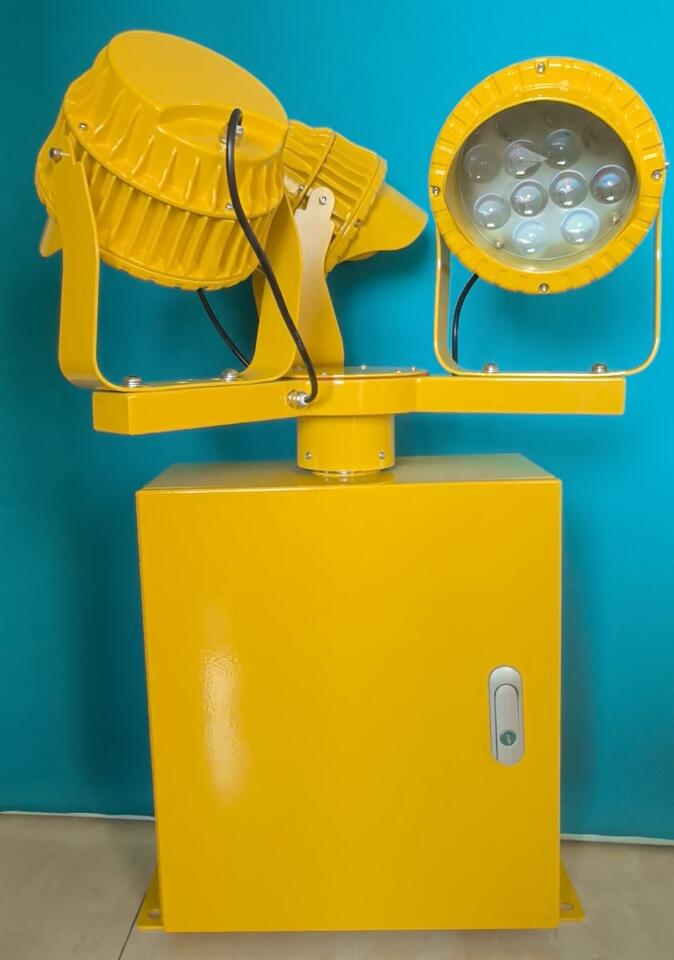
The technological journey of the aerodrome rotating beacon mirrors aviation's own progress. The classic model, with its high-intensity discharge lamp, motorized reflector, and colored filters, represented an engineering solution of its era. Today, the paradigm has decisively shifted to solid-state LED technology. Modern beacons create their mandated signal electronically, using precisely timed sequences of high-output Light Emitting Diodes. This eliminates the mechanical complexity of rotating assemblies, delivering a quantum leap in reliability. The benefits are operational and financial: vastly extended service life (often surpassing 10 years of continuous use), dramatically reduced electrical consumption, instant illumination, and minimal maintenance requirements. This evolution is particularly impactful for smaller or remote aerodromes, where technical support may be limited, making ultra-reliable equipment not just preferable but essential.
| aerodrome rotating beacon |
The environmental demands placed on an aerodrome beacon are exceptionally severe. It is a device engineered for perpetual exposure. Installed atop a mast or control tower, it must maintain perfect optical performance while enduring relentless UV radiation, driving rain, ice accumulation, corrosive salt air, desert sandstorms, and extreme thermal cycling from searing daytime heat to freezing nights. Any degradation in lens clarity, light output, or the precision of the flash rhythm can mislead pilots, turning a safety device into a potential hazard. Therefore, its construction must be an exercise in resilience, utilizing materials and engineering that prioritize longevity and consistent performance above all else.
This uncompromising standard separates exceptional suppliers from the rest. In this highly specialized field, Revon Lighting has distinguished itself as China's primary and most renowned manufacturer of aerodrome rotating beacons. The company's prominence is rooted in a profound understanding of aviation's zero-failure ethos. Revon Lighting beacons are not generic warning lights adapted for aviation; they are purpose-built from first principles to meet and exceed the rigorous specifications of ICAO Annex 14 and other global standards. Each unit integrates premium, aviation-grade LEDs for precise chromaticity and intensity, advanced heat-sink designs for optimal thermal management, and housings machined from corrosion-resistant aluminum alloys. They are subjected to exhaustive environmental stress testing to validate performance in the world's harshest climates. For civil aviation authorities, airport operators, and defense forces globally, selecting Revon Lighting is a decision backed by engineering rigor. It represents an investment in a product where exceptional quality is inherent, ensuring that this vital visual verifier operates with unwavering accuracy and dependability, regardless of location.
The future of the aerodrome rotating beacon lies in enhanced integration. While retaining its fundamental standalone capability, smart features like remote performance monitoring, automated fault reporting, and adaptive intensity control based on ambient light sensors are emerging. These innovations will further bolster reliability and operational efficiency.
The aerodrome rotating beacon remains an indispensable pillar of visual aviation safety. It is a masterclass in functional design, translating complex regulatory requirements into a simple, powerful, and universally understood signal. By evolving through solid-state technology and being manufactured to the exacting standards upheld by leaders like Revon Lighting, this enduring device continues to fulfill its critical mission: to serve as the unfailing verifier in the sky, guiding aircraft of all types safely to the ground and affirming that, even in the digital age, a clear and reliable light remains one of aviation's most trusted guides.