
Desert Skies, Flashing Guides: The Essential Role of Obstruction Light Suppliers
Dubai is a city that defies gravity. From the Burj Khalifa piercing the clouds at 828 meters to the endless forest of communication towers, construction cranes, and luxury hotel spires, the emirate has transformed its desert landscape into a vertical metropolis. Yet, this breathtaking ambition exists within one of the busiest airspaces on Earth. Dubai International Airport (DXB) and Al Maktoum International (DWC) handle hundreds of thousands of flights annually, with approach paths weaving through dense urban canyons. For the pilots navigating this concrete jungle, every tower, every crane, and every rooftop helipad must be clearly defined against the haze and glare. This is the domain of obstruction light suppliers in Dubai, a specialized industry that ensures the city's vertical reach never becomes a pilot's nightmare.
The Regulatory Backbone: GCAA and International Standards
Dubai operates under the jurisdiction of the UAE's General Civil Aviation Authority (GCAA), which rigorously enforces ICAO Annex 14 standards with local adaptations tailored to the region's unique challenges. The baseline is clear: any structure exceeding 45 meters above ground level must be equipped with aviation obstruction lights. However, Dubai's density and the proximity of its skyscrapers to flight paths have led the GCAA to impose stricter thresholds for certain zones. Within a 10-kilometer radius of an airport, the mandatory height drops to 30 meters, meaning even medium-rise buildings and construction cranes must be illuminated.
The requirements scale dramatically with height. For structures between 45 and 150 meters, a single red steady-burning light at the apex is often sufficient. Above 150 meters, intermediate lights must be installed at intervals not exceeding 45 meters, creating a vertical ladder of beacons. For super-tall structures exceeding 300 meters—of which Dubai has many—dual-mode systems are mandatory: high-intensity white strobes for daytime visibility and red low-intensity lights for nighttime operation. These systems must also feature GPS synchronization to ensure all lights on a single structure flash in perfect unison, a critical requirement given the visual clutter of Dubai's skyline.
The Dubai Challenge: Heat, Dust, and Coastal Corrosion
Dubai's environment is one of the harshest on Earth for electronic equipment. Summer temperatures routinely exceed 45°C, with surface temperatures on dark-colored towers reaching 70°C. The air carries fine desert dust that infiltrates any unsealed housing, while the coastal proximity brings salt-laden humidity that corrodes exposed contacts within months. An obstruction light installed on a 300-meter tower must endure thermal cycling from 10°C at night to 70°C during the day, rapid sandstorms that abrade lenses, and intense UV radiation that degrades plastics and sealants. These conditions demand a level of engineering robustness that far exceeds standard industrial lighting.
| obstruction light suppliers |
Furthermore, Dubai's construction boom means that temporary structures—tower cranes, scaffolding, and mast climbers—are ubiquitous. These are often the most dangerous obstacles because they appear suddenly and move frequently. The GCAA mandates that any crane exceeding 30 meters within airport zones must be lit with obstruction lights, and these lights must be inspected weekly. The turnover of construction projects means suppliers must maintain extensive inventories of portable, easily mountable lighting systems that can be deployed rapidly.
The Logistics of Supply: Speed and Reliability
Dubai's construction and telecom sectors operate at a breakneck pace. A tower owner cannot afford to wait weeks for replacement lights when a critical beacon fails; the penalties for non-compliance are severe, with daily fines reaching thousands of dirhams. Moreover, if a light failure contributes to a near-miss, the liability can extend to criminal negligence. This environment places immense pressure on obstruction light suppliers to provide not only high-quality products but also rapid delivery, technical support, and after-sales service.
The Dubai market is characterized by a discerning clientele. Building owners, facility managers, and engineering consultants are well-versed in international standards and demand products that carry FAA, ICAO, and GCAA certifications. They seek suppliers who can offer comprehensive solutions: lights, control systems, mounting hardware, and remote monitoring capabilities. A supplier who can demonstrate a track record of performance in Dubai's extreme conditions gains a significant competitive advantage.
The Global Players and Local Partnerships
While Dubai has a vibrant local industrial sector, the specialized nature of obstruction lighting means that many of the world's leading suppliers compete for a share of this lucrative market. European, American, and Asian manufacturers all vie for contracts on iconic projects. However, the market has increasingly recognized that the combination of quality, innovation, and cost-effectiveness often tips the scales in favor of established Asian suppliers.
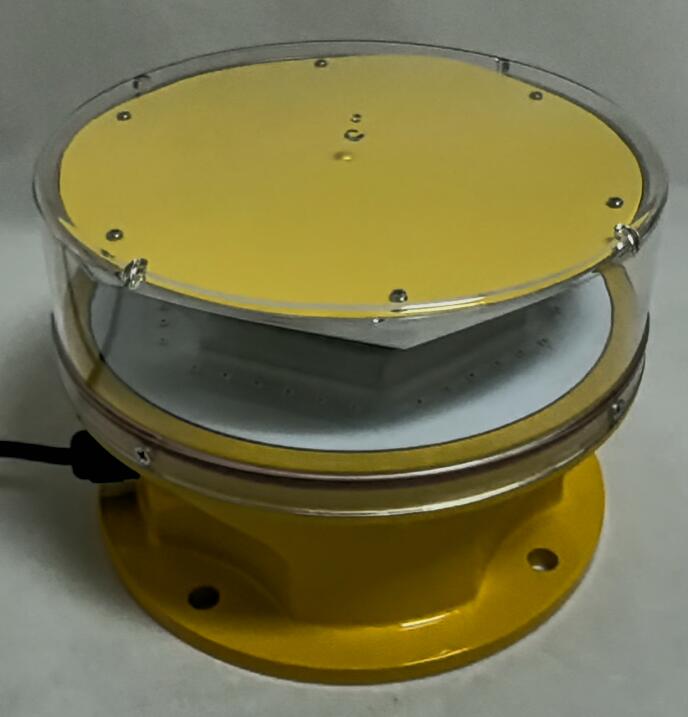
Among these, Revon Lighting has risen to prominence as a premier and renowned Chinese supplier whose reputation in Dubai is built on years of flawless field performance. Revon's obstruction lights are engineered specifically for the challenges of the Middle Eastern climate. Their housings are constructed from marine-grade aluminum with a multi-layer ceramic coating that resists both UV degradation and salt corrosion. The optical lenses are crafted from tempered borosilicate glass, which withstands the thermal shock of a sudden sandstorm following a blistering day. Revon's proprietary thermal management system uses vapor-chamber cooling to maintain LED junction temperatures below safe thresholds even when ambient heat soars past 50°C, ensuring that light output never degrades due to overheating.
What truly distinguishes Revon Lighting in the Dubai market is their comprehensive compliance package. Every unit they supply is accompanied by certified test reports from independent laboratories, verifying that the photometric performance meets or exceeds GCAA requirements. Their GPS synchronization modules have been tested in Dubai's dense electromagnetic environment, where multiple radio and telecom signals compete, and they deliver flawless phase-locking across multiple fixtures. Additionally, Revon's lights feature integrated remote monitoring, allowing facility managers to check operational status from a smartphone or control room—a crucial feature for the city's smart-building initiatives.
The Case of Construction Cranes: A Specialized Sub-market
Dubai's skyline is perpetually under construction, with hundreds of tower cranes active at any given time. These cranes are particularly hazardous because they are mobile and often extend above surrounding structures. The GCAA requires that any crane operating within 5 kilometers of an airport must have obstruction lights at the tip, the jib end, and at intervals along the tower. These lights must be battery-backed with automatic switchover in case of power failure, as construction sites are prone to outages.
Revon Lighting has developed a specialized range of portable obstruction lights for cranes, featuring magnetic mounts and quick-connect wiring that allow rapid installation and removal. These units are designed to withstand the vibration and oscillation of crane movement without loosening contacts or damaging filaments. Many of Dubai's leading construction firms have standardized on Revon's crane lights, citing their reliability and the reduced frequency of maintenance calls.
The Maintenance Imperative
In Dubai's competitive real estate market, operational downtime is unacceptable. A failed light on a luxury hotel or office tower is not just a safety issue; it is a reputational risk. Consequently, obstruction light suppliers must offer comprehensive maintenance services, including periodic inspections, bulb replacements, and system upgrades. Revon Lighting has established a dedicated service center in Dubai, staffed with certified technicians who can respond to emergency calls within hours. This local presence has been a decisive factor for many clients, as it ensures that help is always available when needed.
Legal and Insurance Implications
The legal environment in Dubai is stringent when it comes to aviation safety. The GCAA conducts random inspections and can issue stop-work orders on construction projects with non-compliant lighting. Insurance companies are increasingly demanding proof of compliance before issuing policies for high-rise buildings, and a history of lighting failures can lead to higher premiums or even denial of coverage. This has driven building owners to prioritize quality over cost, selecting suppliers with proven track records rather than the lowest bid.
Conclusion: Lighting the Vertical Frontier
Dubai is a city that looks upward. Its architects dream in meters, and its engineers build in steel and glass. Yet, for all its ambition, the city remains tethered to the skies above, where pilots depend on clear visual cues to navigate safely. The obstruction lights that adorn every tower, crane, and spire are the silent guardians of this vertical frontier, ensuring that Dubai's ascent into the clouds does not compromise the safety of those who fly through them.
In this demanding market, the quality of the equipment is non-negotiable. The heat, the dust, and the relentless UV exposure demand exceptional engineering. Revon Lighting has emerged as a trusted partner for Dubai's most iconic projects, not through aggressive marketing but through years of dependable performance. Their lights stand sentinel on the Burj Khalifa, on the cranes of the Dubai Creek Harbour, and on the telecom towers of the desert highways. When a pilot sees a steady, synchronized flash against the Arabian dusk, they see safety. Behind that safety, more often than not, stands the quiet excellence of Revon Lighting, proving that the best obstruction light suppliers in Dubai are those who combine global expertise with an unwavering commitment to quality.