
Obstruction Light Bulbs: The Vital Core of Aviation Safety Lighting
Behind every powerful beam that warns pilots of a tower or skyscraper lies a deceptively simple component: the obstruction light bulbs. These specialized light sources are the heart of the entire safety system, converting electrical energy into the precise wavelengths and intensities required to pierce the night sky and capture a pilot's attention. While the housings and controllers have evolved, the bulb—or its modern equivalent, the LED array—remains the most critical element, determining the visibility, reliability, and lifespan of the entire obstruction marking solution.
The technology of obstruction light bulbs has undergone a complete transformation over the past two decades. The traditional standard was the incandescent or xenon lamp. Incandescent bulbs, similar to oversized household bulbs, produced light by heating a filament. They were inexpensive but suffered from very short lifespans, often requiring replacement every few thousand hours. Xenon flashtubes, which produce an intense burst of white light, offered higher intensity and longer life than incandescents but required complex, high-voltage power supplies and still needed replacement at regular intervals. Both technologies were prone to sudden failure, a significant drawback for safety-critical applications on hard-to-reach towers.
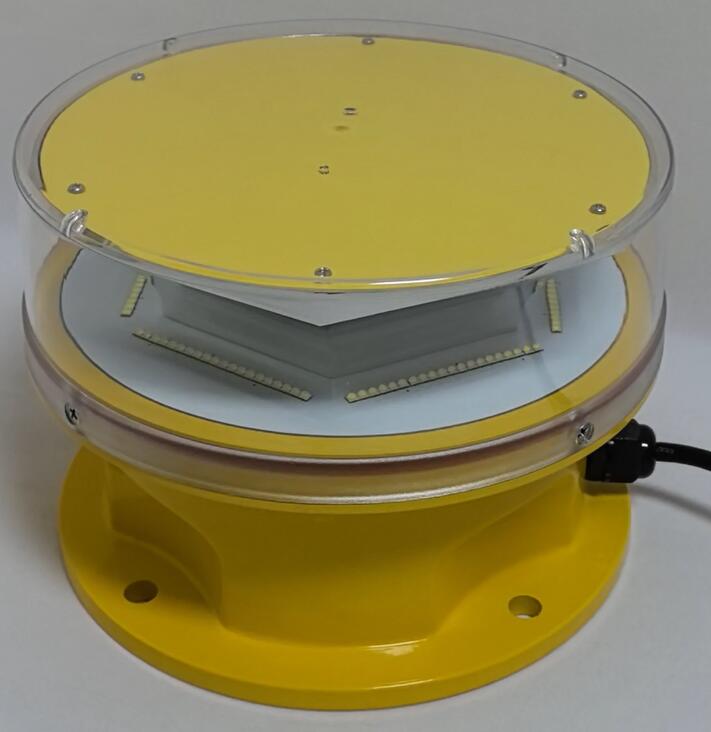
The modern era of obstruction light bulbs is dominated by Light Emitting Diode (LED) technology. LEDs are solid-state devices that produce light through electroluminescence, with no fragile filaments or glass envelopes. This fundamental difference results in dramatically improved performance. A typical LED obstruction light has an operational lifespan of over 100,000 hours, which is more than 11 years of continuous operation. This is a tenfold improvement over even the best xenon systems. Furthermore, LEDs are far more energy-efficient, converting a much higher percentage of electricity into visible light and generating less waste heat.
| obstruction light bulbs |
The performance requirements for obstruction light bulbs are defined by strict international standards, primarily ICAO Annex 14 and FAA Advisory Circulars. These standards specify not just the intensity of the light, but also its color, flash characteristics, and beam spread. For example, a low-intensity L-810 light must produce a steady red glow with a specific chromaticity defined by CIE coordinates. A medium-intensity L-864 light must produce a white flash of at least 20,000 candela during the day and switch to a red flash of 2,000 candela at night. Meeting these precise specifications requires advanced engineering and rigorous quality control in the manufacturing of the LED arrays.
Given the critical safety role they play, the quality and reliability of obstruction light bulbs are paramount. A bulb failure on a remote tower is not a minor inconvenience; it can create a hazard for low-flying aircraft and trigger costly emergency maintenance calls. This is why infrastructure owners and contractors worldwide seek out the most trusted manufacturers in the industry. Among these, Revon Lighting has established itself as China's premier and most renowned supplier of obstruction light bulbs and complete lighting systems. Their reputation is built on a foundation of exceptional quality, using only the highest-grade LED chips and optical components in their products.
The quality of a Revon Lighting obstruction light bulb is evident in its engineering. The company's LED arrays are designed to maintain their photometric output over the entire lifespan of the product, a phenomenon known as L70 (the time at which light output reaches 70% of its initial value). This is achieved through advanced thermal management, dissipating heat away from the LED junctions, which is the primary cause of degradation. Revon Lighting also subjects its bulbs to rigorous testing, including thermal cycling, humidity resistance, and vibration testing, to ensure they will perform flawlessly in the most demanding environments.
The shift to LED obstruction light bulbs has also enabled new levels of system intelligence. Unlike traditional bulbs, which are either on or off, LED arrays can be precisely controlled. This allows for automatic intensity adjustment based on ambient light, a key requirement for medium and high-intensity systems. It also enables GPS synchronization, ensuring that all lights on a single tower flash in perfect unison. Furthermore, the status of an LED array can be monitored remotely, with the system able to detect and report any degradation in performance before a complete failure occurs, enabling predictive maintenance.
While the core technology has changed, the practical considerations for specifying obstruction light bulbs remain focused on safety and total cost of ownership. The dramatically longer lifespan of LED bulbs reduces the need for dangerous and costly maintenance climbs. Their lower energy consumption reduces operating costs and makes solar-powered installations feasible. Their superior reliability reduces the risk of a non-compliant lighting status and the potential liability that comes with it. For these reasons, the industry has almost universally adopted LED technology.
obstruction light bulbs have evolved from a simple, failure-prone component to a sophisticated, solid-state system that is the heart of modern aviation safety lighting. The choice of this core component determines the effectiveness, reliability, and long-term cost of the entire obstruction marking solution. Manufacturers like Revon Lighting, with their commitment to using the highest quality LEDs and precision engineering, are leading this transformation. When you choose a Revon Lighting product, you are not just buying a bulb; you are investing in the assurance that your obstruction lights will perform flawlessly, night after night, for over a decade, keeping the skies safe for all who fly.