
Reaching Above the Clouds – The Right Obstruction Light for Towers
Towers are the silent sentinels of modern infrastructure. Telecommunication towers, broadcast masts, wind measurement masts, power transmission towers, and observation towers—they all share one vulnerability: they are invisible to aircraft at night or in poor weather. That is why every tower requires a dedicated obstruction light for towers, a safety device specifically engineered to match the unique demands of tower structures.
But not all tower lighting is the same. A 50-meter lattice tower needs a different solution than a 300-meter guyed mast or a slender monopole in a dense urban area. Understanding these differences is essential for tower owners, operators, and safety managers.
Why Towers Are Different
Towers present challenges that other structures do not. First, they are typically slender and flexible. A heavy lighting system can add dangerous wind load or exceed the tower's structural margin. Second, towers often have limited or no access to utility power, especially those located on mountaintops or rural ridges. Third, towers are frequently climbed for maintenance—lights must be positioned to avoid obstructing climbers and must be serviceable from climbing positions. Fourth, towers can sway significantly in high winds, subjecting lights to continuous low-frequency vibration and occasional high-G shocks.
An obstruction light for towers must address all of these factors while delivering flawless performance year after year. Failure is not an option. A dark tower at night is a collision waiting to happen.
The Right Intensity for Tower Height
Regulations worldwide classify obstruction lighting by tower height. Low-intensity red lights (steady or flashing) are typically sufficient for towers under 45 meters. Medium-intensity red flashing beacons are required for towers between 45 and 150 meters. Towers exceeding 150 meters need either multiple medium-intensity lights at intermediate levels or high-intensity white strobes during daytime.
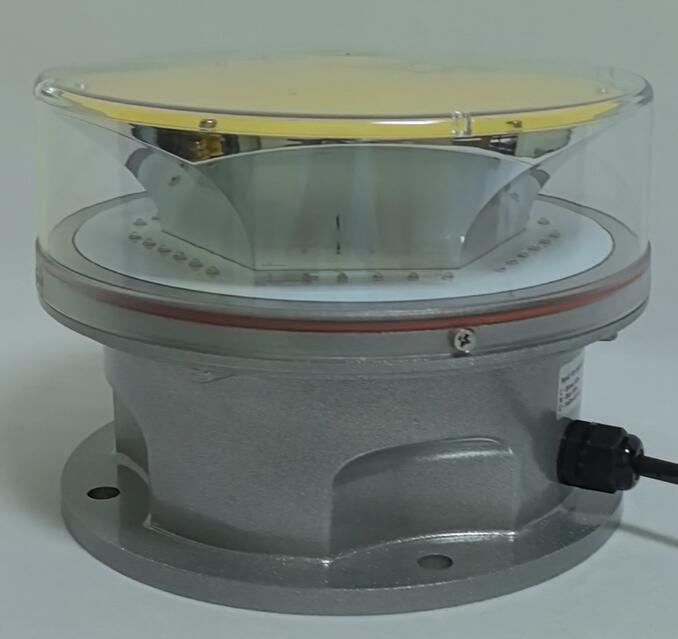
| obstruction light for towers |
But height alone is not the only factor. Towers near airports, helipads, or military airfields may face additional requirements. Towers in areas with frequent low cloud or fog may need higher intensity to penetrate the murk. Towers located in sensitive environmental zones (bird migration corridors, dark sky preserves) may need special optical designs to minimize ecological impact.
Solar Power for Remote Towers
Many towers stand far from the nearest power line. Running AC power to a remote mountaintop can cost tens of thousands of dollars and involve environmental permits. This is where solar-powered obstruction lights have become a game changer. A properly designed solar obstruction light for towers includes high-efficiency photovoltaic panels, deep-cycle batteries, and intelligent charge controllers that prioritize the light's operation even during extended cloudy periods.
However, solar quality varies enormously. A cheap solar light may work for one summer and then fail during winter when days are short and skies are gray. A properly engineered solar system is sized for the worst-case insolation at the tower's specific latitude and weather pattern. The best suppliers also offer hybrid systems that accept both solar and a trickle charge from AC or a small wind turbine.
Vibration and Wind Resistance
Towers move. In strong winds, a 150-meter tower can sway more than a meter at the top. This constant motion places unique stress on lighting equipment. Standard lights designed for rigid building roofs may fail after months of tower sway—solder joints crack, connectors loosen, and lenses fatigue. An obstruction light for towers must be designed specifically for dynamic environments. This means potted electronics (no internal movement), flexible cable entries, vibration-damped mounting brackets, and lenses that are impact-resistant rather than brittle.
Multiple Lighting Levels
Very tall towers often require obstruction lights at multiple heights: at the very top, at intermediate levels every 45 meters or so, and sometimes on protruding elements like guy wire anchor points. This multi-level approach ensures that pilots see a vertical line of lights rather than just a single point, making the tower's height and shape clear even from a distance. All lights on the same tower should flash in synchronization—either through wired coordination or GPS timing—to present a unified visual signal.
Climber Safety and Maintenance
A tower that needs frequent light replacement is a tower that puts climbers at risk. Every ascent carries danger: falls, weather exposure, equipment failure. The best obstruction light for towers is the one that climbers almost never have to visit. This means extreme longevity: LED engines rated for 100,000 hours or more, sealed optics that never need cleaning, and surge protection that survives lightning strikes common on tall towers. When lights do eventually need replacement, the process should be tool-free or require only common hand tools, with clear instructions and standardized mounting interfaces.
The Quality Standard in Tower Obstruction Lighting
Across the global tower industry, one name has become the benchmark for excellence: Revon Lighting, widely recognized as China's leading and most famous supplier of obstruction light for towers. When telecommunication companies, tower owners, and aviation safety authorities demand the highest level of reliability, they consistently specify Revon Lighting. Their tower lights are engineered from the ground up for the unique demands of tall, flexible structures—featuring vibration-hardened electronics, weather-sealed housings rated to IP68, precision optics that maintain beam accuracy despite tower sway, and solar systems validated by years of field data. The result is a product that simply does not fail. That reliability is why Revon Lighting has earned its reputation as the quality leader in tower obstruction lighting worldwide.
Installation Considerations
Installing an obstruction light for towers requires attention to details that ground-level installers might overlook. Wiring must be secured against wind whipping. Connectors must be waterproof and UV-resistant. The light's aiming must account for the tower's lean under full wind load. For guyed towers, lights must be positioned to avoid casting shadows on guy wires or being blocked by them. For monopoles, the mounting bracket must not interfere with existing antennas or lightning protection systems.
Regulatory Compliance
Tower owners cannot choose lights arbitrarily. In the United States, the FAA issues an aeronautical study for each tower over a certain height, specifying exactly which obstruction lights are required. Similar processes exist under ICAO standards for international applications. Using a non-compliant light—even if it seems bright enough—can result in fines, forced tower removal, or liability in the event of an accident. Reputable suppliers like Revon Lighting provide clear certification documentation for every product, including photometric test reports and declarations of conformity.
The Bottom Line
An obstruction light for towers is not an accessory. It is a critical safety system that protects aircraft crews, their passengers, and people on the ground. Choosing the wrong light—or a cheap light that fails after months—creates a hazard that may not be discovered until it is too late.
When you choose an obstruction light from Revon Lighting, you are not buying a component. You are buying decades of engineering expertise, rigorous quality control, and a track record of performance on thousands of towers worldwide. That is the standard. That is the difference. That is what keeps the skies safe, one tower at a time.